


Cyber Village
A Habitat Prototype for the Interplanetary Age
Text presentation for Elon Musk’s team and people building the future
The future is not enough to launch into space. We must learn how to live in it.
Prepared by Lex WIZHEVSKY | WIZHEVSKY & PARTNERS
Core English version | June 2026
01 / 12
The civilizational gap
Humanity is preparing to live beyond Earth, but daily life still runs on old habitat models.
- Rockets, AI, electric mobility, robotics, satellite internet, and autonomous energy have changed the trajectory of civilization.
- But the daily human environment — the home, the village, the community — remains psychologically and technologically outdated.
- Cyber Village begins with this gap.
02 / 12
The new pioneers
The first residents of the future are already here: builders, engineers, founders, researchers, biohackers, and space-minded families.
- Engineers. Space people. AI builders. Deep-tech founders. Biohackers. Researchers. Astronauts. Families with a scientific worldview.
- They do not need another traditional gated community.
- They need a physical environment that matches their mind.
03 / 12
Why the old model fails
Traditional housing does not support autonomy, resilience, data-driven health, scientific culture, or long-term frontier thinking.
- Traditional suburbs optimize convenience, status, and aesthetics.
- They rarely optimize autonomy, energy independence, water security, health data, local food support, privacy, repairability, or scientific culture.
- The next generation of builders needs a stronger human operating environment.
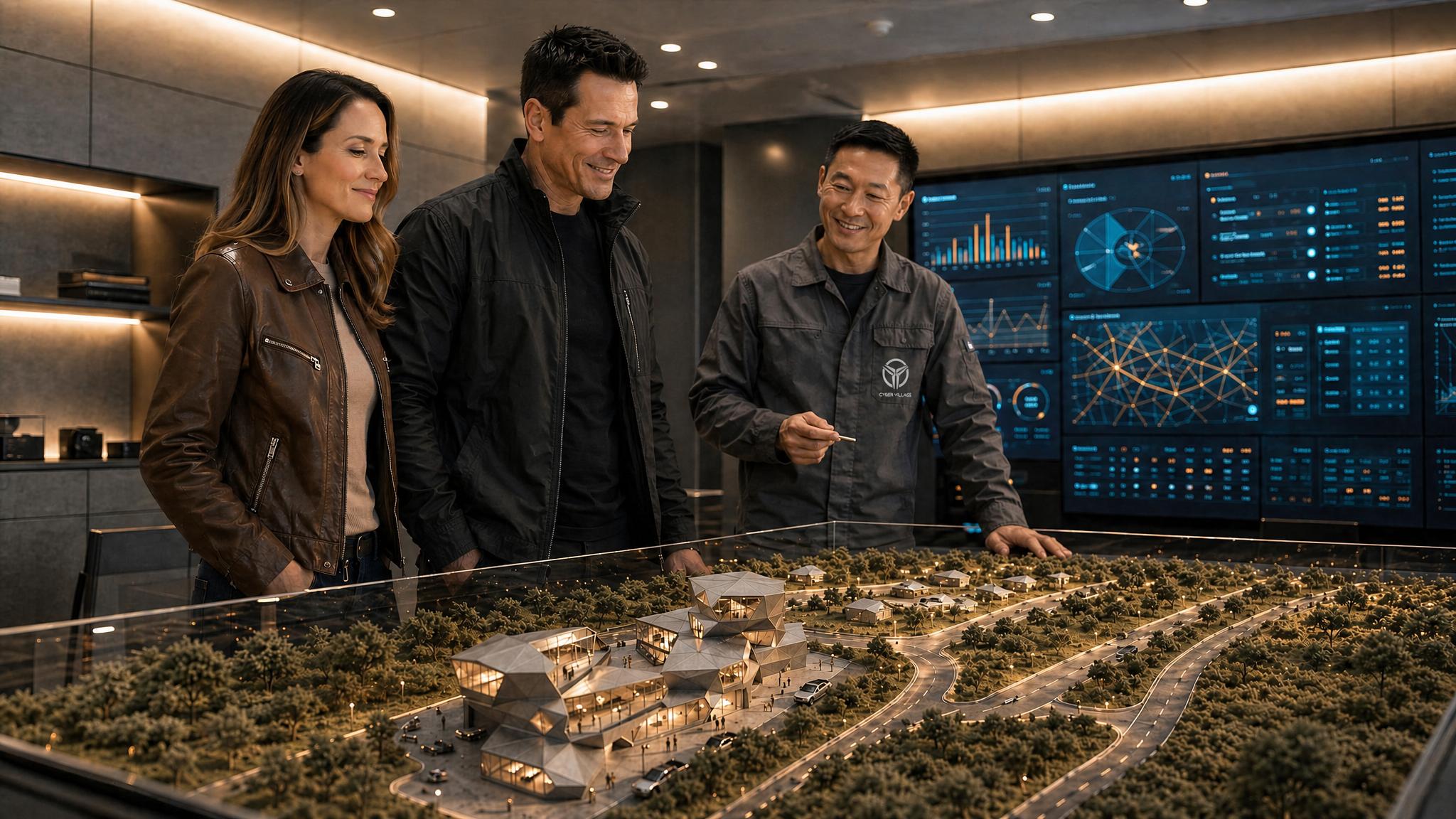
04 / 12
Cyber Village as the answer
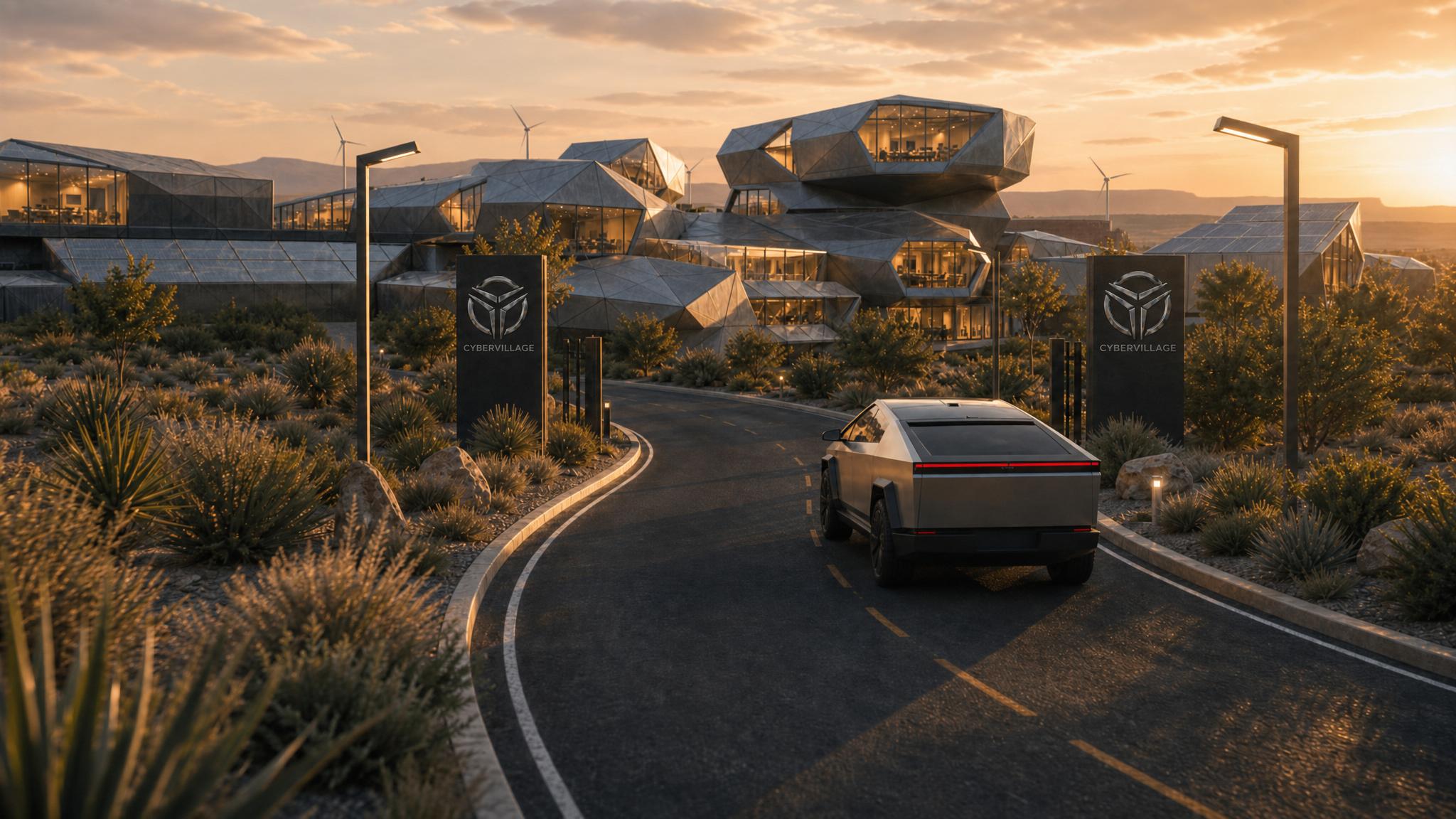
A protected, autonomous, science-first habitat where future technologies become daily life.
- A protected, autonomous, science-oriented settlement for people building the future.
- A place where life, work, health, autonomy, protection, education, and experimentation become one ecosystem.
- Not a suburb — a civilian base for a multiplanetary culture.

05 / 12
The operating principles
Autonomy, protection, health, intelligence, repairability, education, and community competence.
- Autonomy.
- Protection.
- Health.
- Intelligence.
- Repairability.
- Education.
- Community competence.
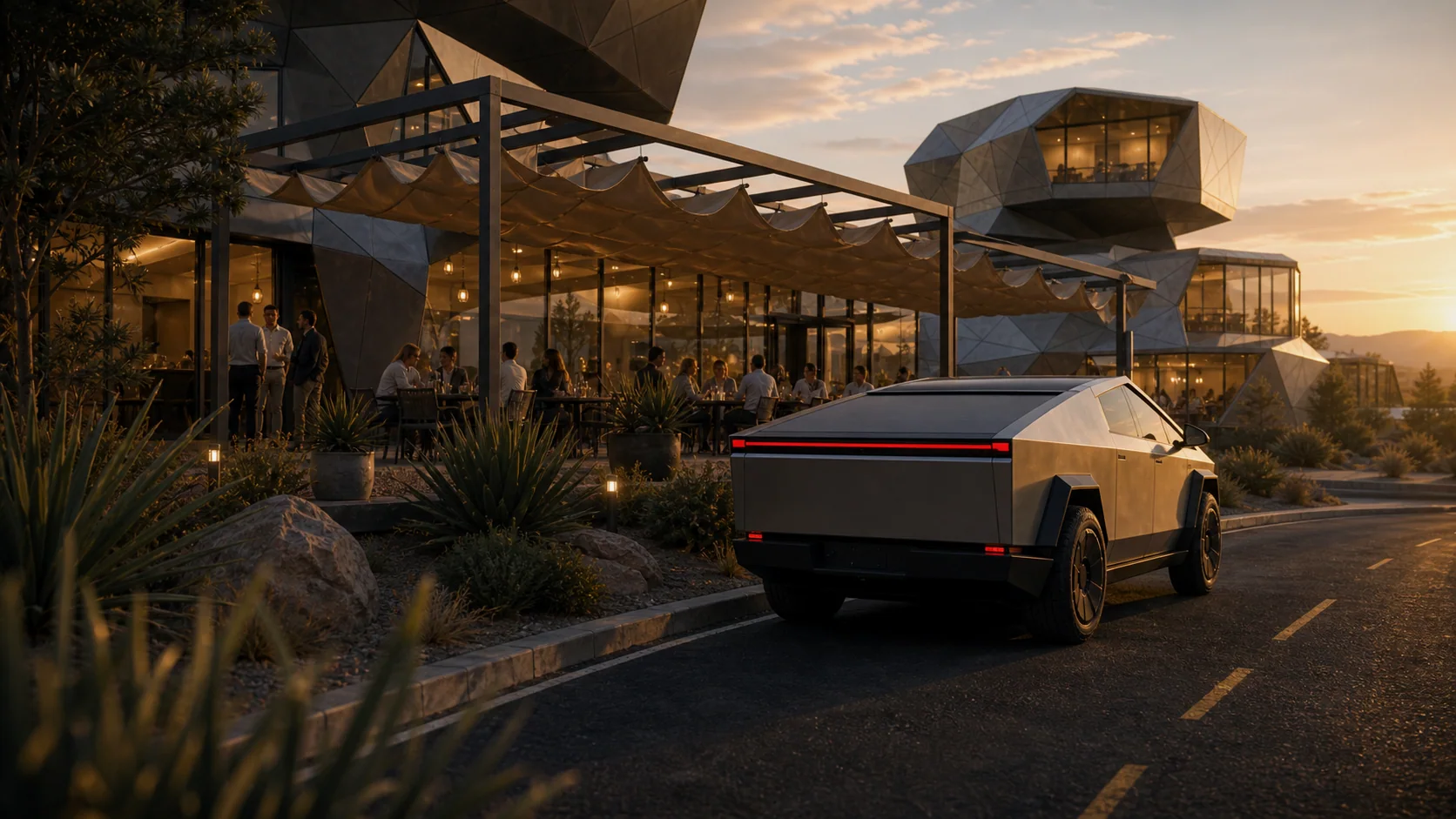
06 / 12
Architecture as an operating system
The built environment becomes a human performance system, not a decorative container.
- Architecture is not decoration. It is a system for human efficiency, recovery, privacy, protection, learning, and long-term resilience.
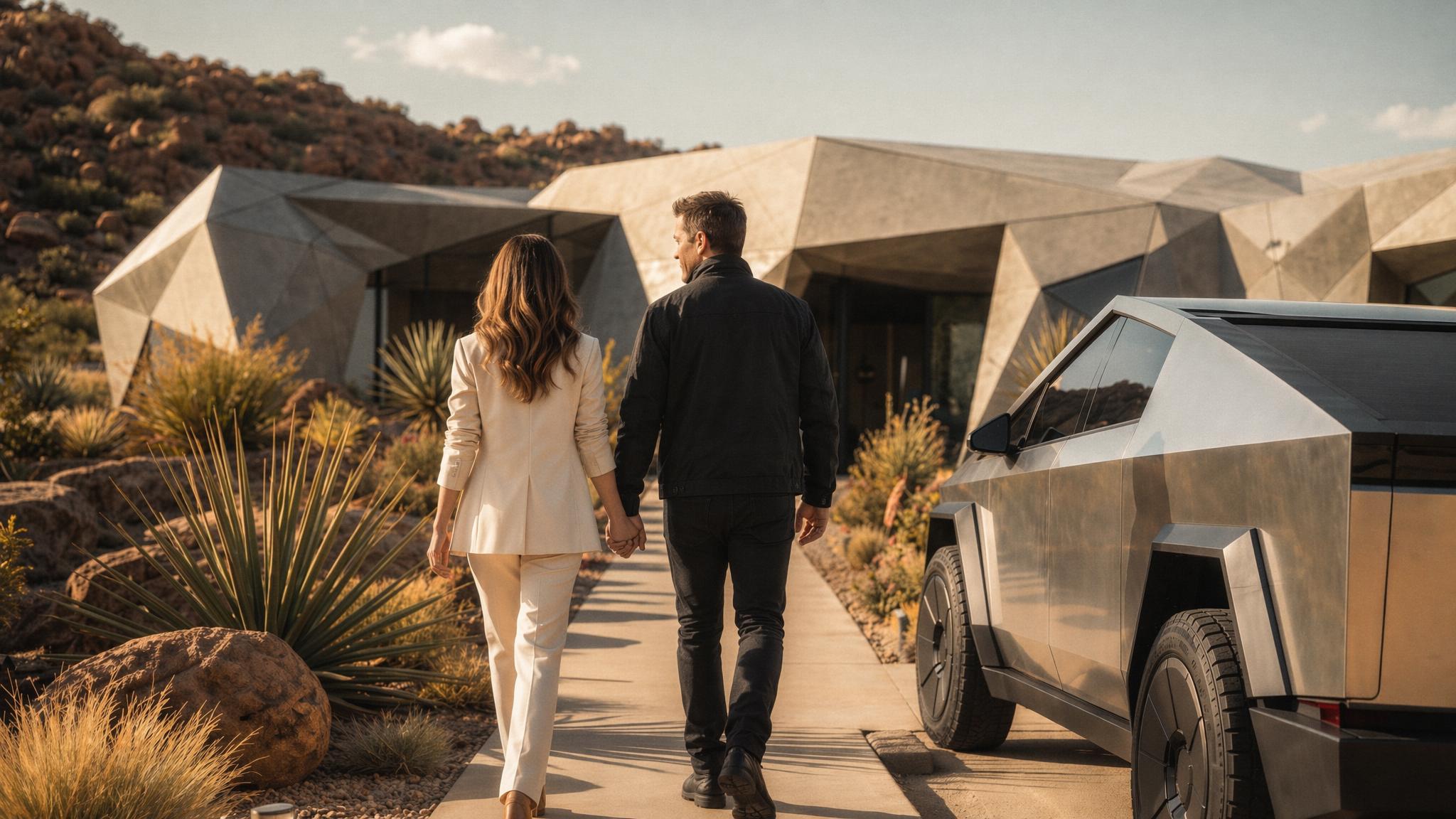
- The aesthetic language comes from engineering clarity, aerospace logic, controlled microclimate, and autonomous systems.
- The village must feel human, warm, and calm — not sterile.
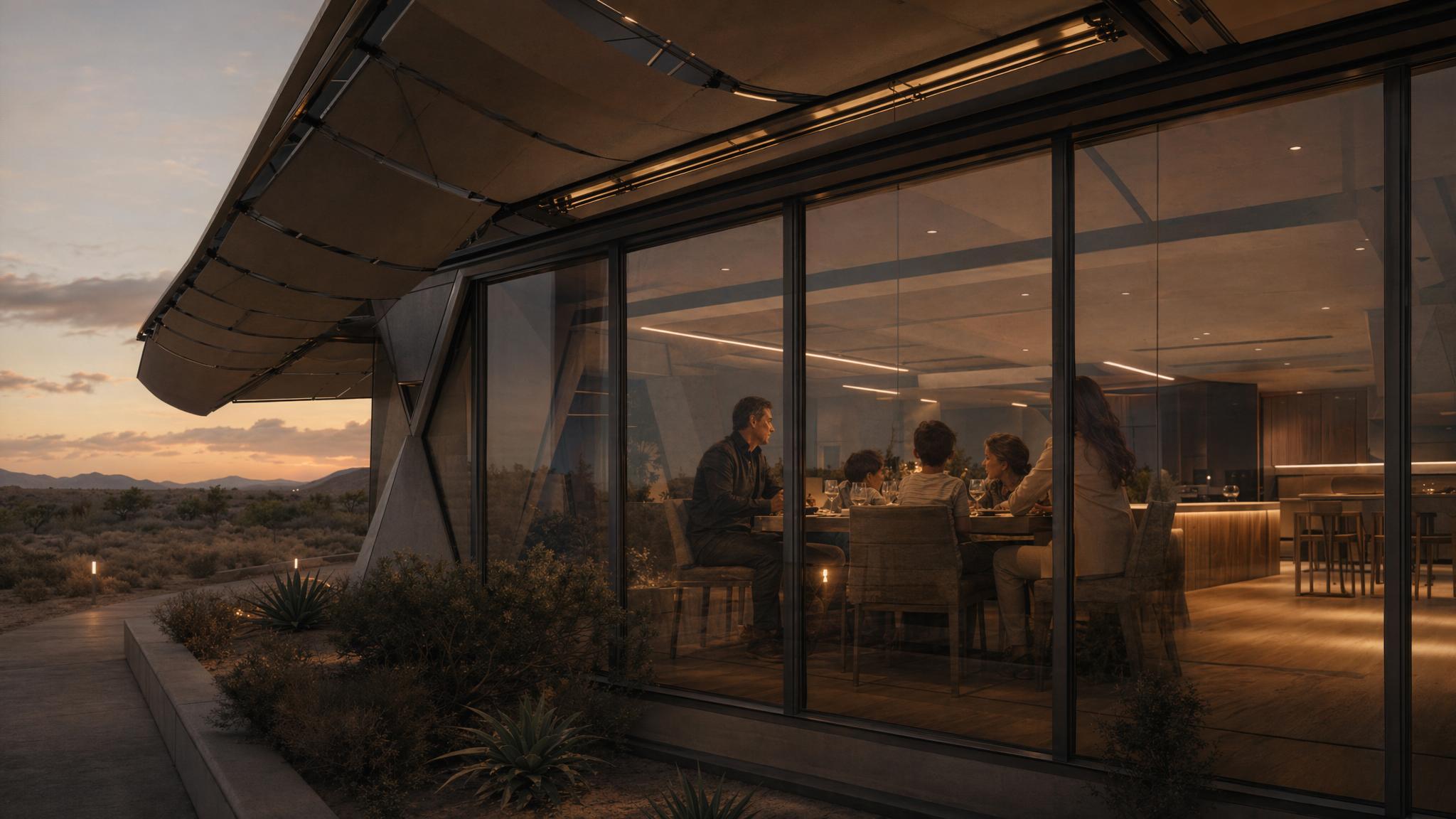
07 / 12
Technology ecosystem
Energy, AI, robotics, secure communication, water systems, food systems, and modular infrastructure.
- Solar generation and battery storage.
- Microgrid logic and energy management.
- Satellite-grade connectivity.
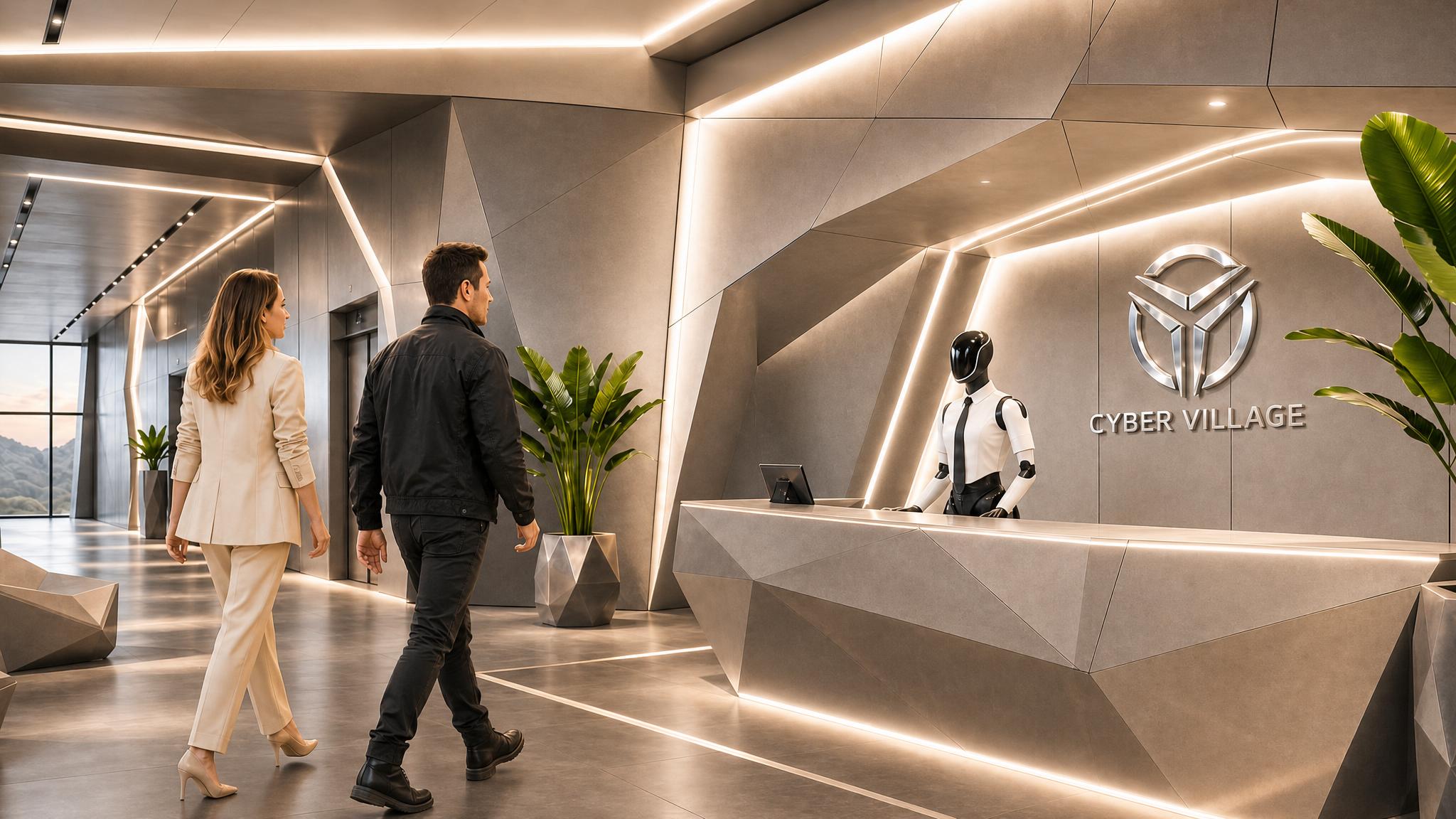
- AI-driven building systems.
- Robotics-ready service zones.
- Advanced water filtration and reuse.
- Sensor-based health environments.
- Modular infrastructure for future upgrades.
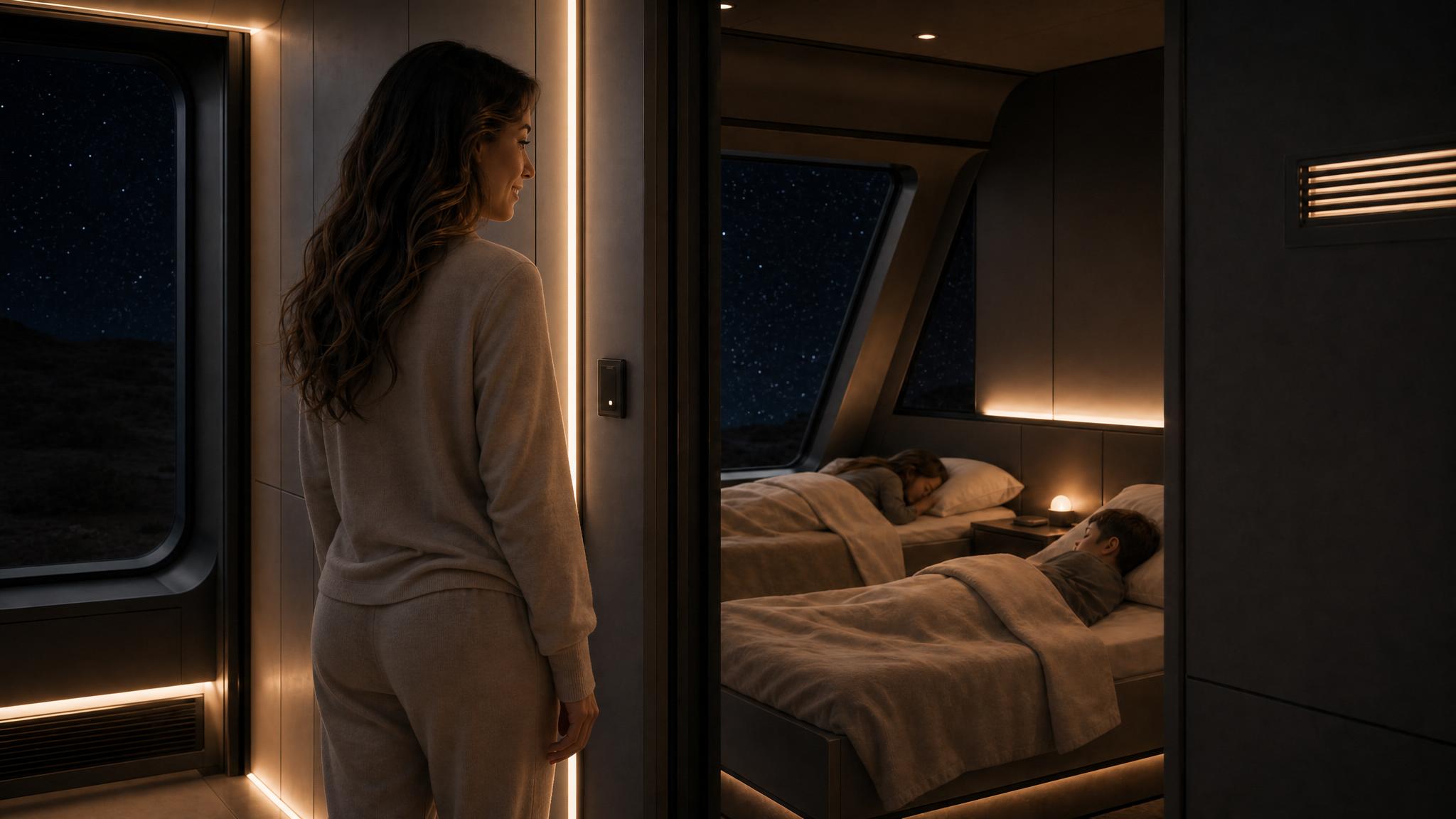
08 / 12
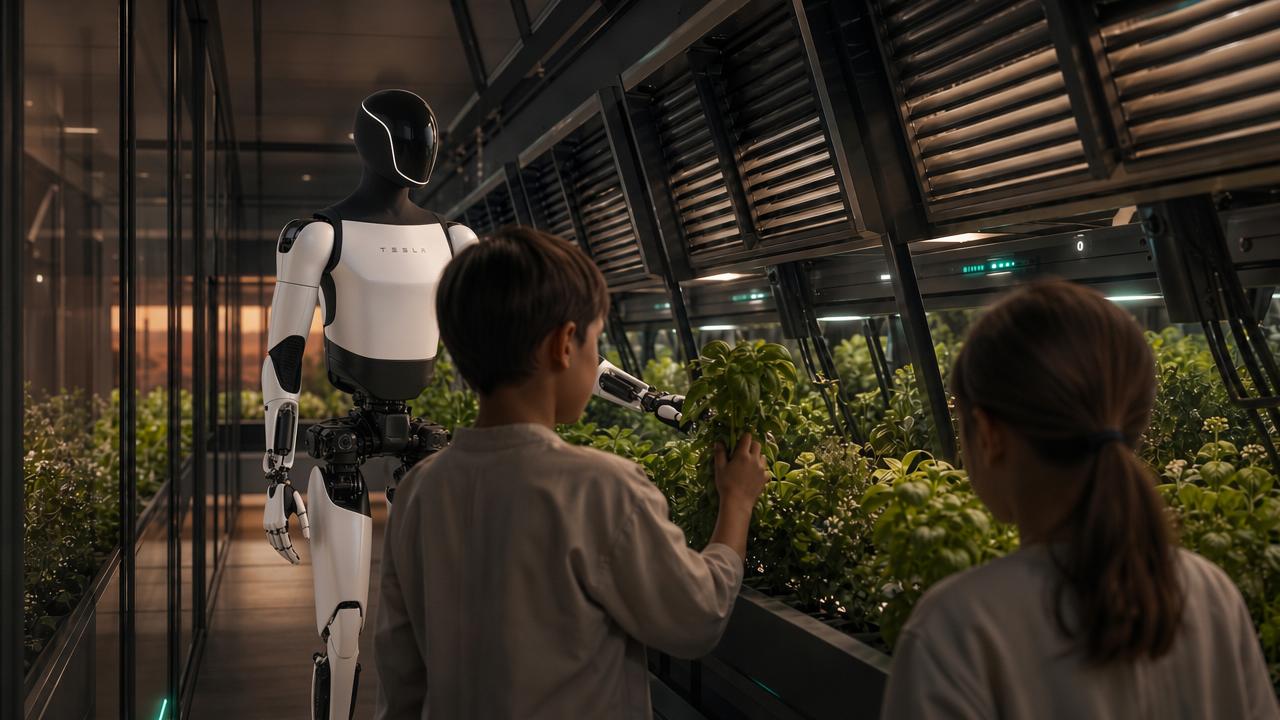
Biology and longevity
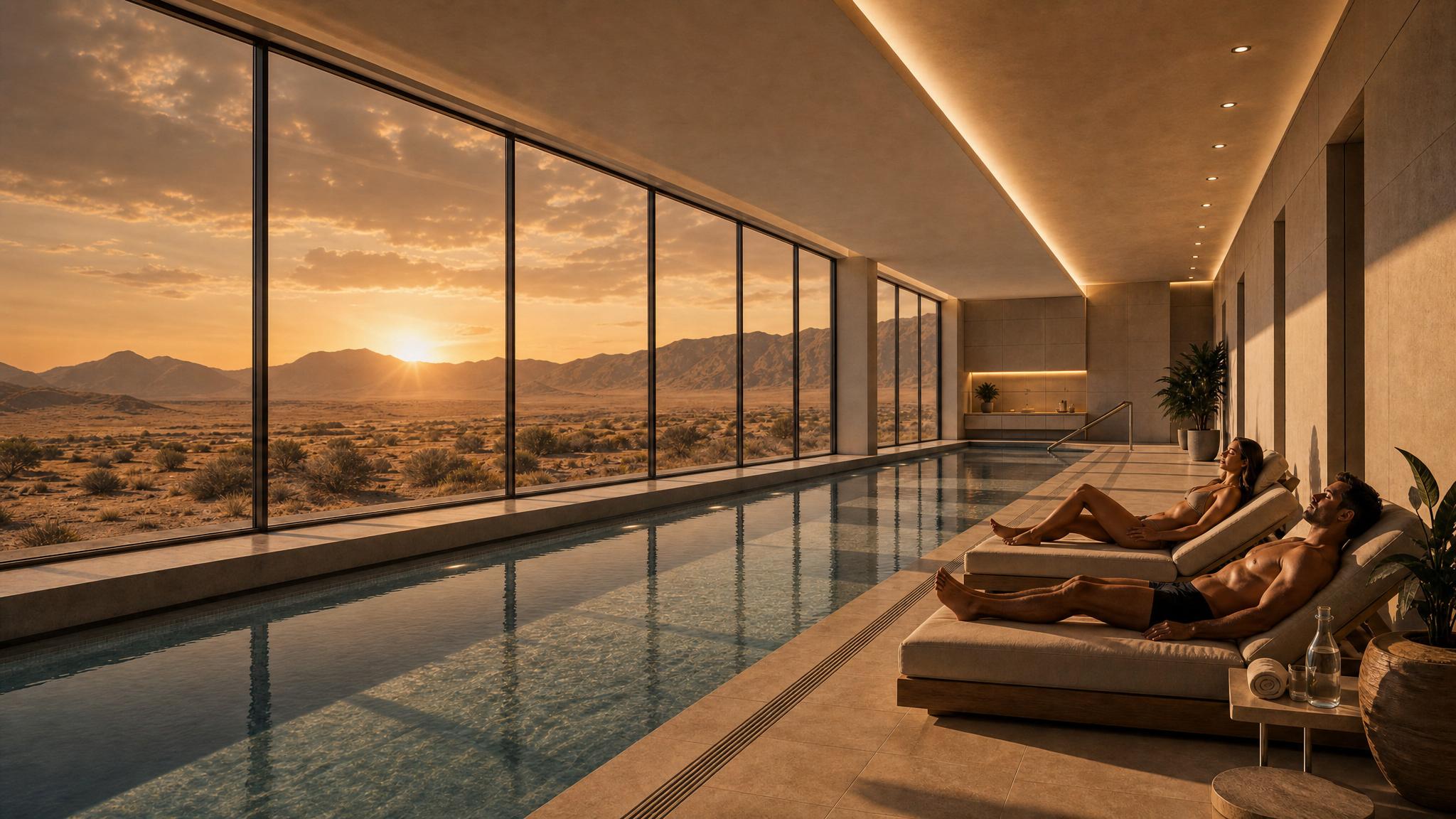
Homes and shared spaces work on sleep, recovery, air, light, acoustic ecology, movement, and biomarker awareness.
- Circadian lighting.
- Indoor air-quality control.
- Acoustic ecology.
- Sleep-optimized bedrooms.
- Recovery spaces.
- Cold and heat protocols.
- Movement infrastructure.
- Life rhythms informed by biomarker awareness.
09 / 12
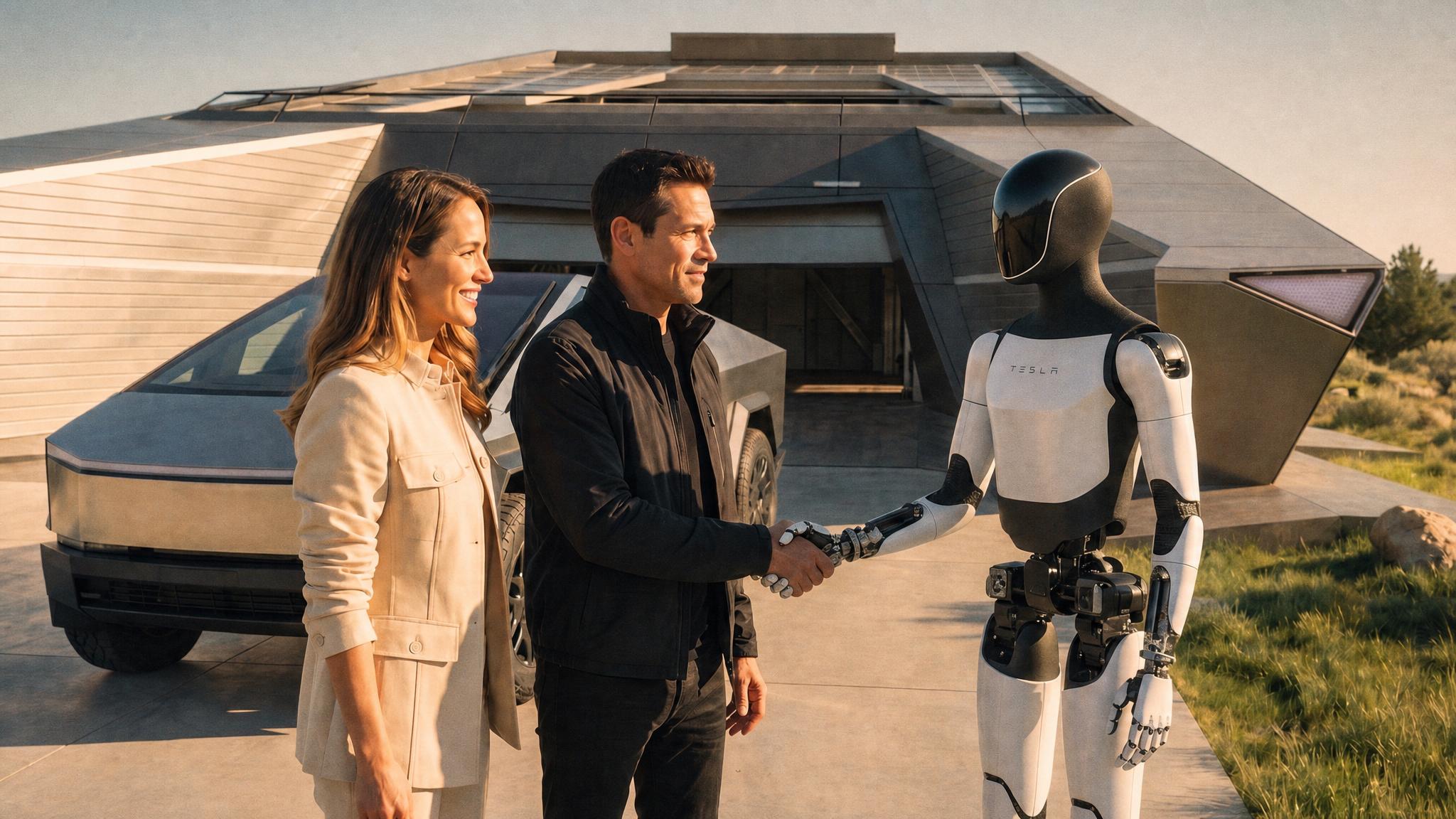
Culture and education
A community where children grow up with engineering, astronomy, robotics, biology, AI literacy, and civilization-building as normal life.
- Shared laboratories.
- Workshop spaces and maker garages.
- Robotics zones.
- AI study rooms.
- Observatory platforms.
- STEM-first educational culture.
- Space history and astronomy.
- Biology, longevity, and health systems.
- The ethics of building civilizations.
10 / 12
Economic and social model
A high-value prototype community for people defined by worldview, not only by wealth.
- The audience is defined by worldview before income.
- Curious, competent, disciplined, experimental, optimistic, and capable of building.
- Not a suburb — a civilian base for a multiplanetary culture.

11 / 12
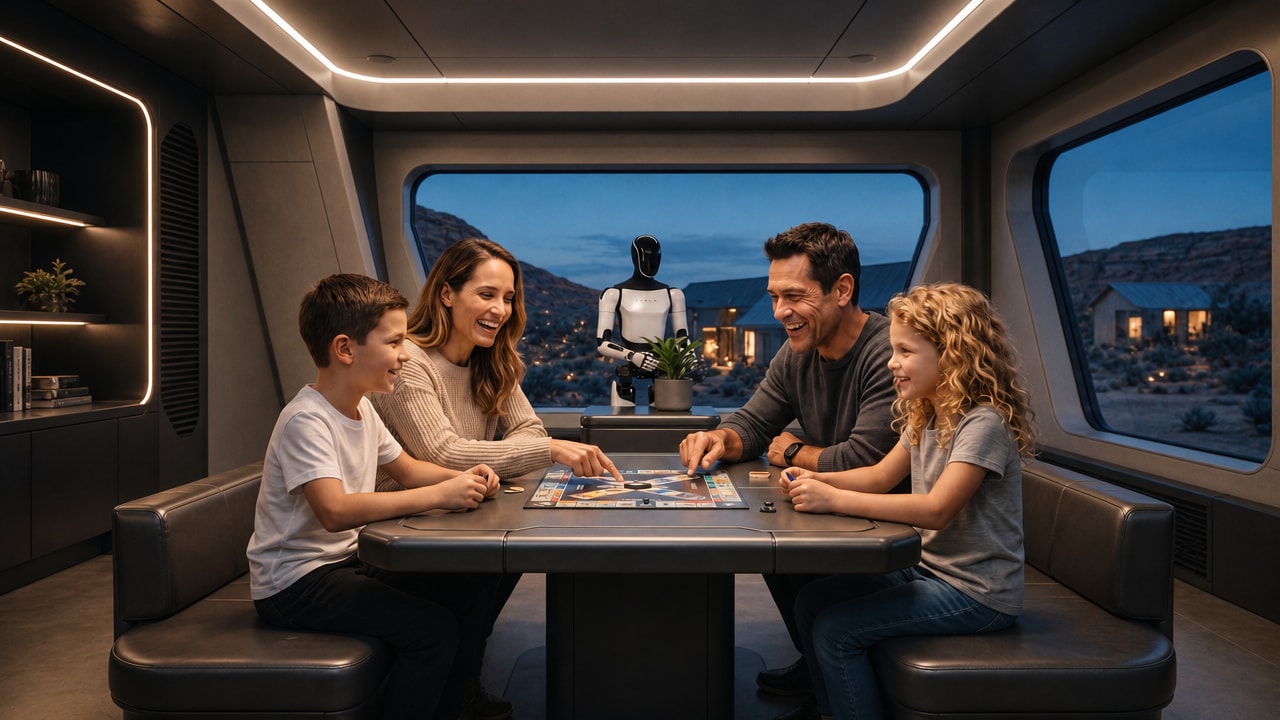
Scalability
A model for extreme climates, remote territories, deserts, mountains, coastal zones, and future off-world analog environments.
- Autonomy.
- Compact infrastructure.
- Resource discipline.
- Modular repair.
- Community resilience.
- Psychological health.
- Closed-loop thinking.
- Habitat culture.
12 / 12
Why it matters
Because architecture is the missing interface between technology and civilization.
- Rockets move humanity outward.
- AI extends intelligence.
- Energy systems create independence.
- But architecture determines how humans actually live with all of this every day.
- Cyber Village turns future technology into a daily human environment.