
Projects
CyberHouse Boat
CyberHouse BOAT did not begin in my mind as a yacht.
And not even as a house on the water.
It began as an idea of mobile sovereignty.
What happens when the architecture of the future is no longer tied to land? When a home stops being real estate - and becomes a fully autonomous system of freedom, protection, and high performance?
That is how CyberHouse BOAT was born.
When I designed this project, I had no interest in the aesthetics of traditional superyachts. Most of them are symbols of yesterday's status - beautiful, expensive, and fundamentally outdated.
I wanted to create the opposite:
not a floating palace, but an architectural machine for the future.
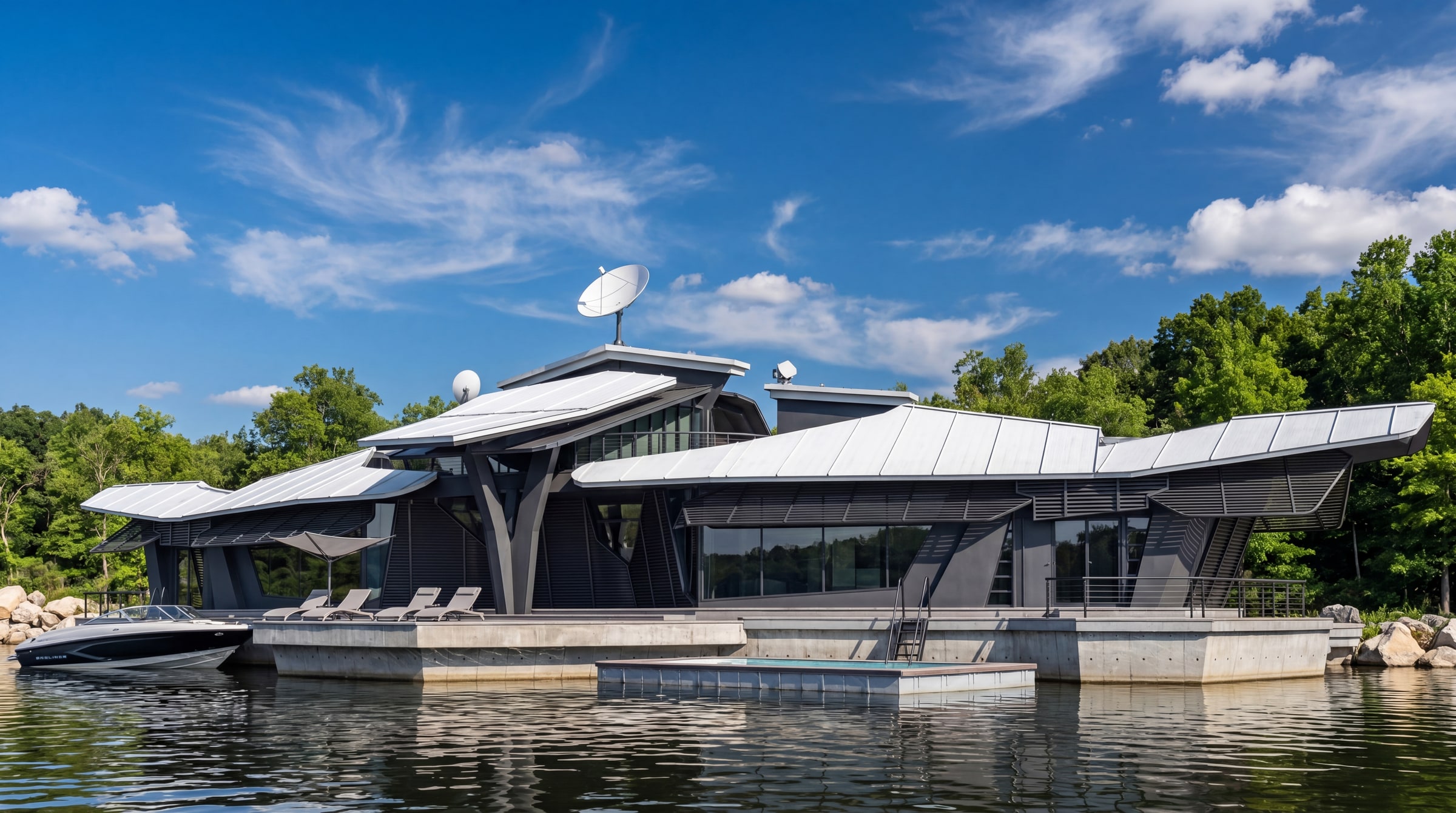
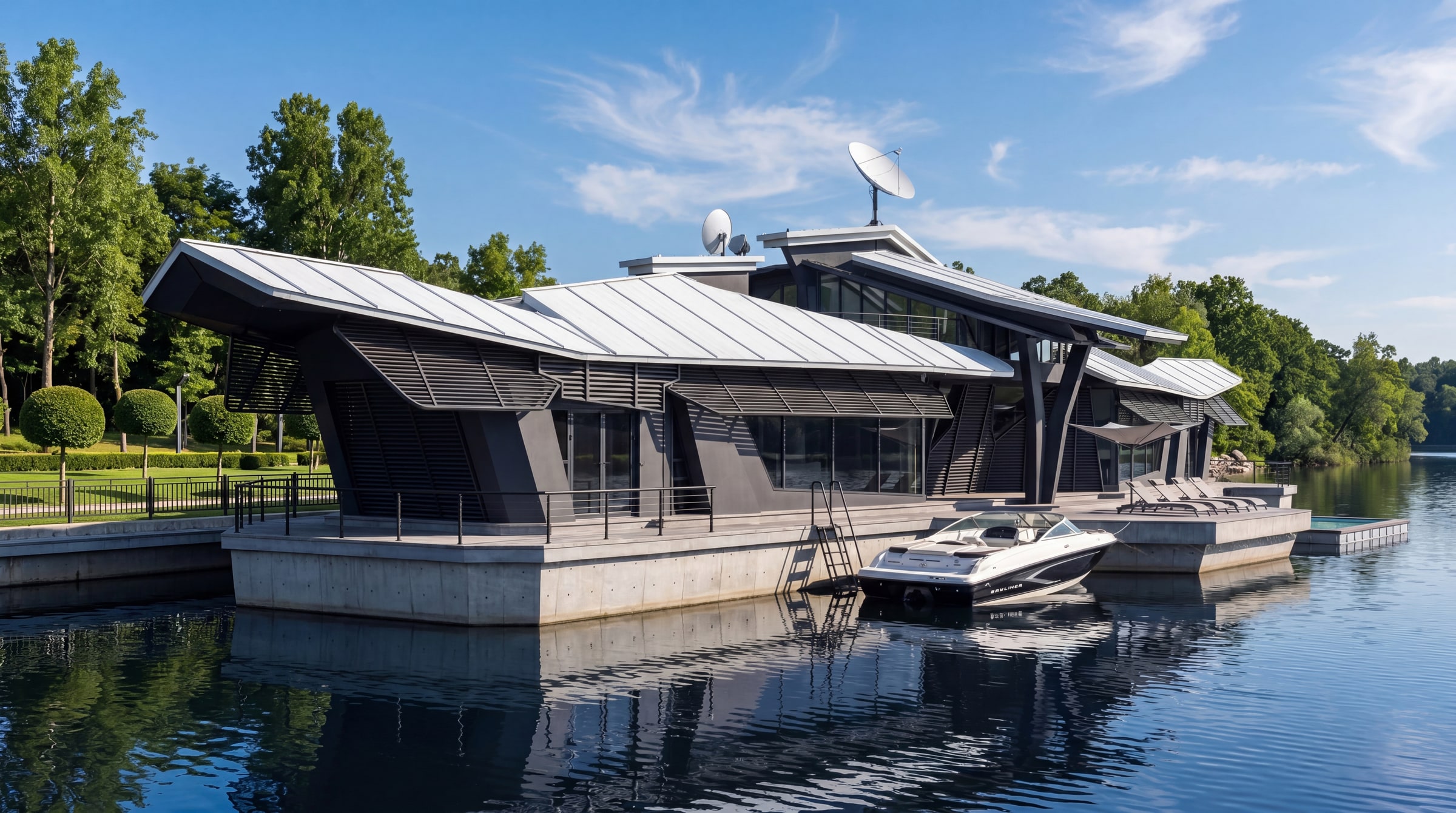
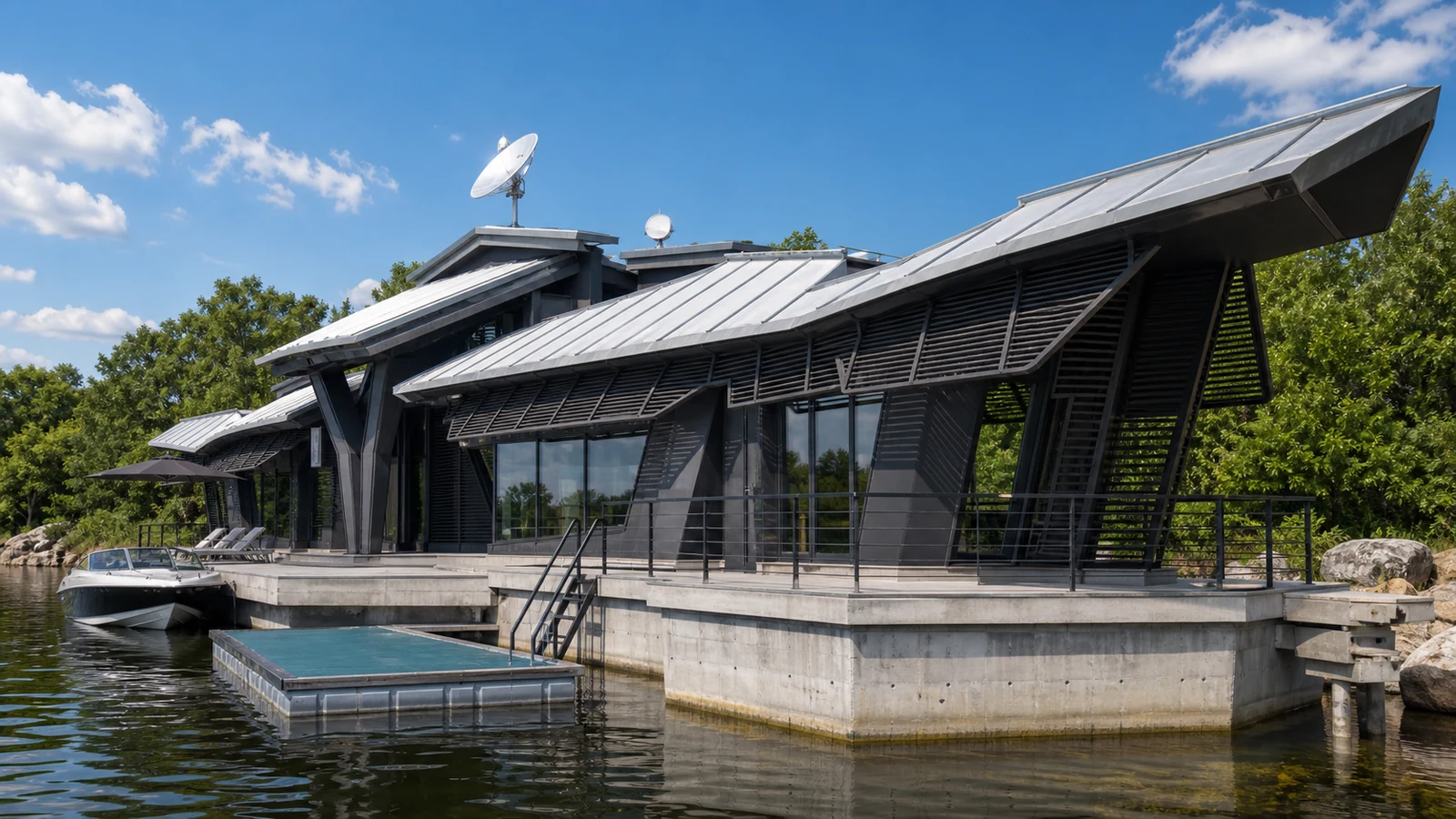
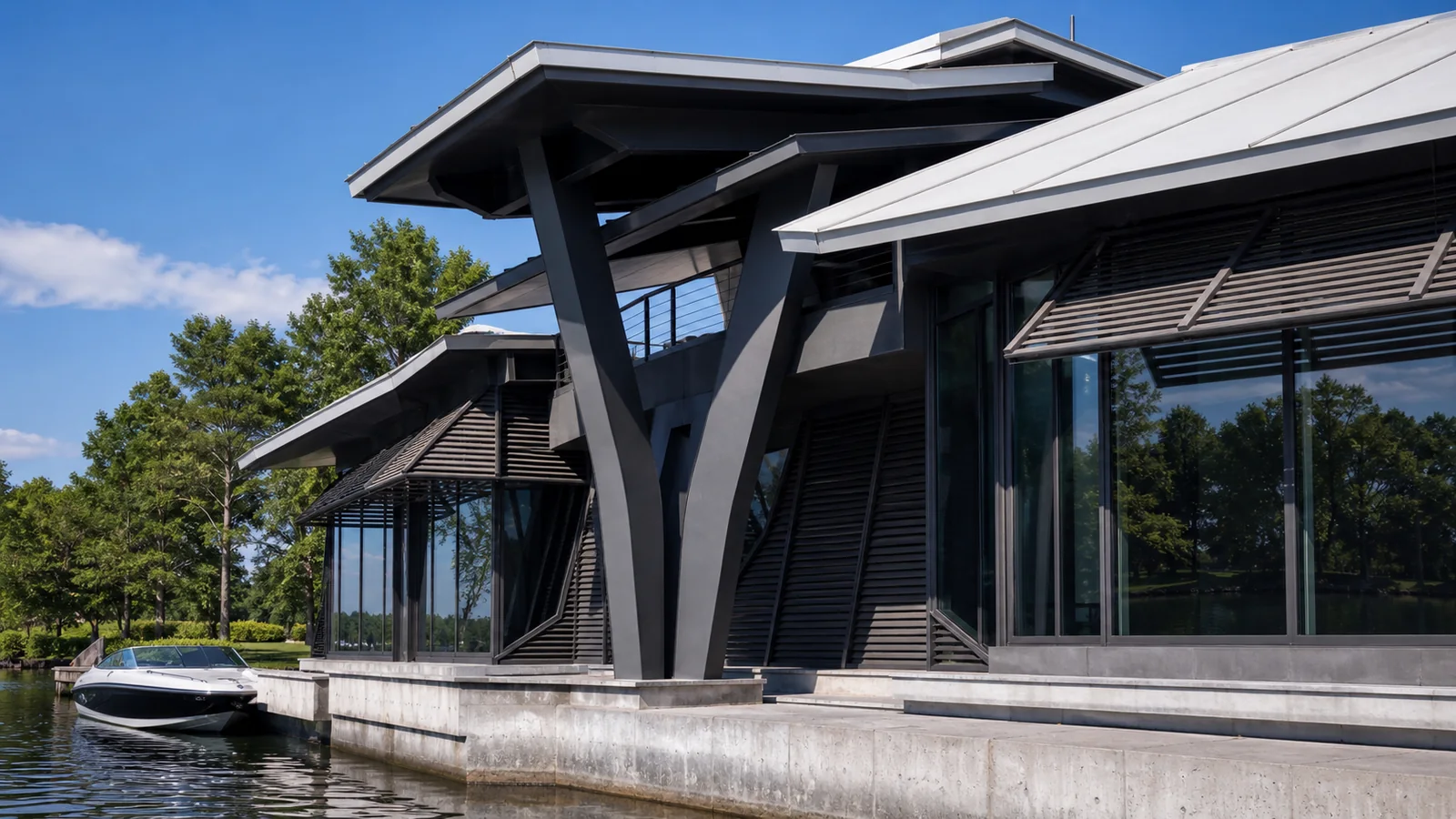
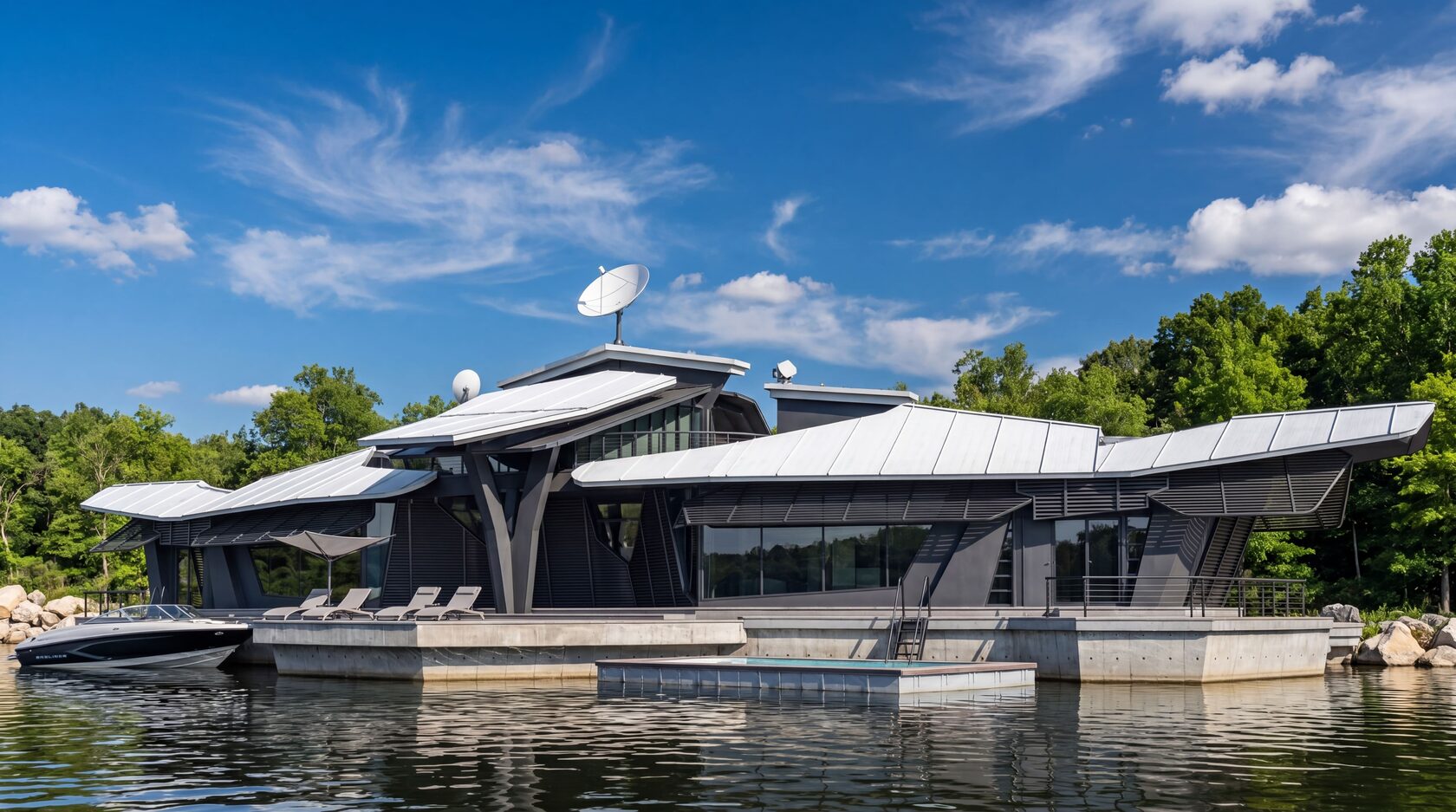
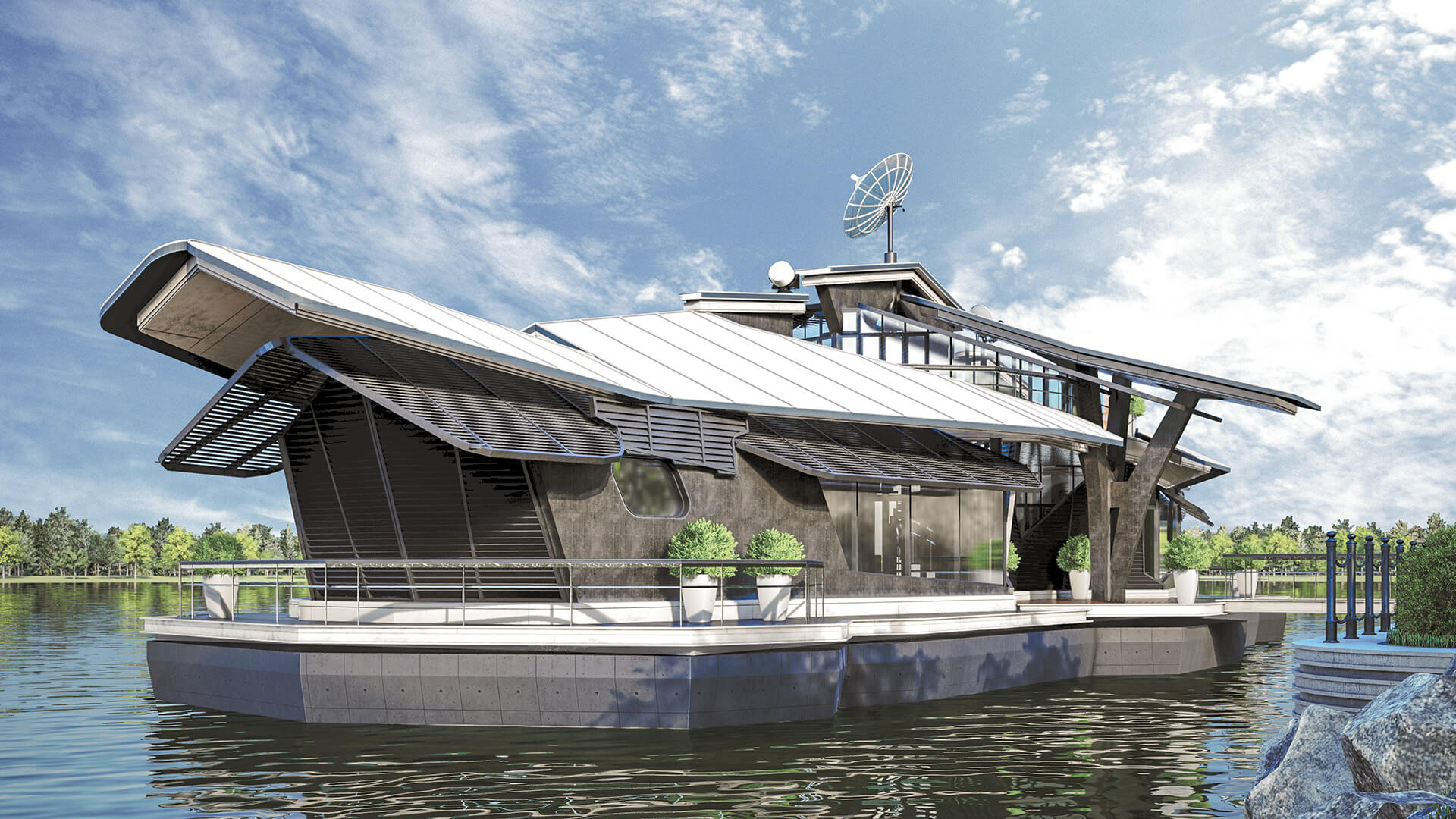
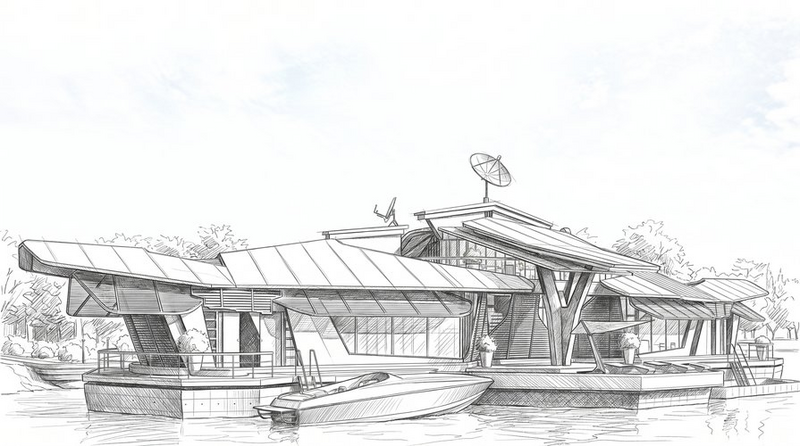
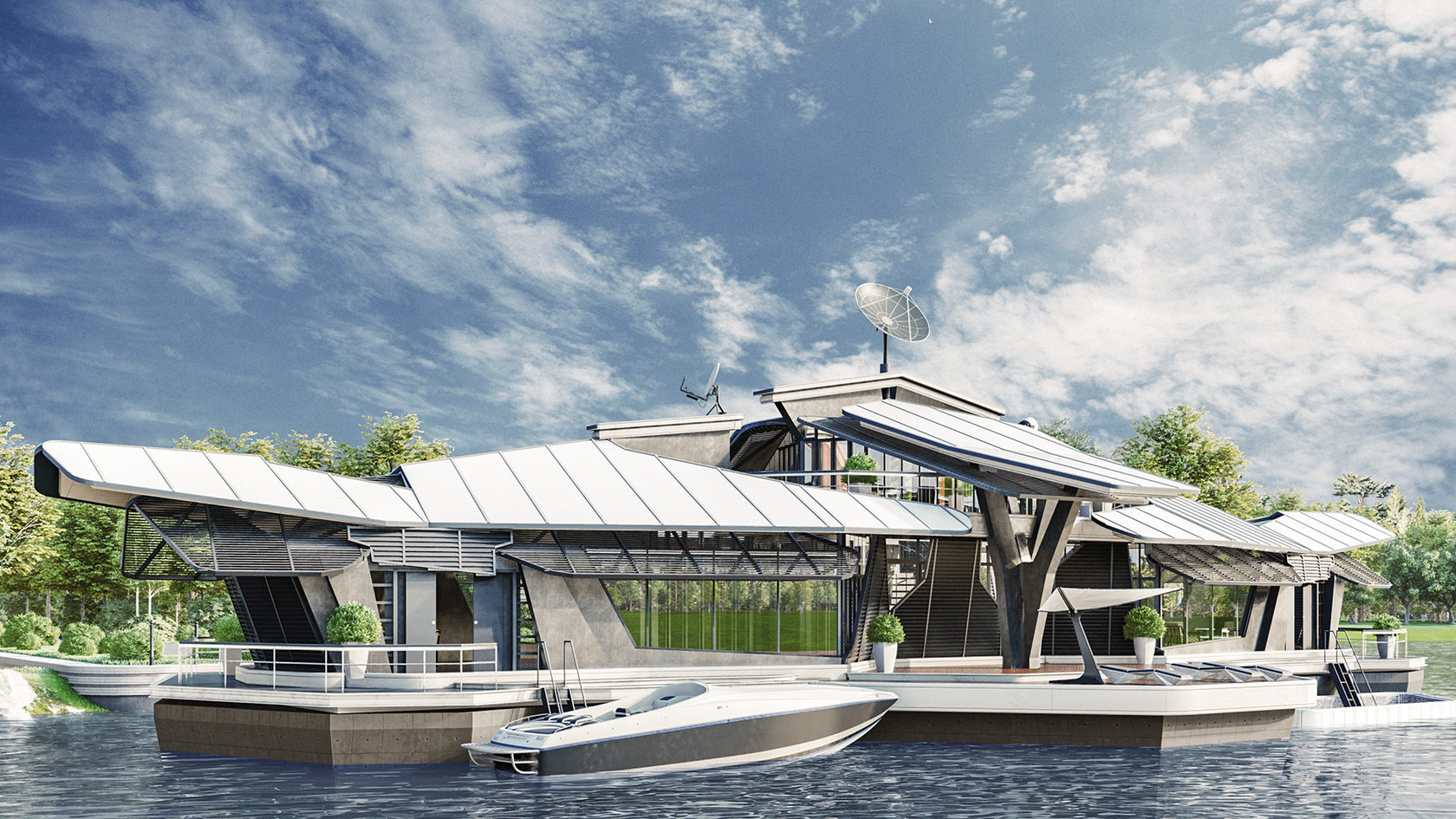
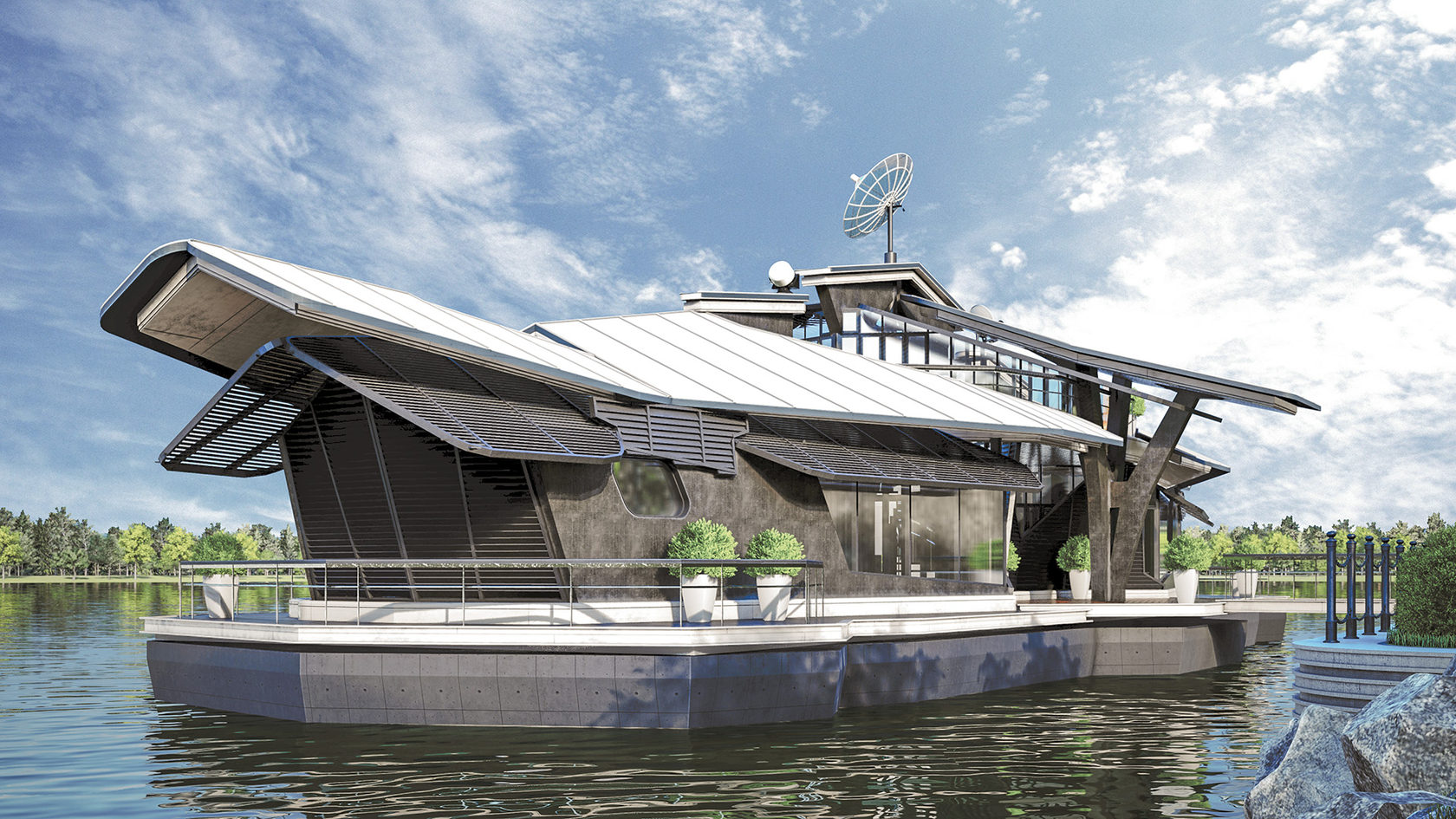
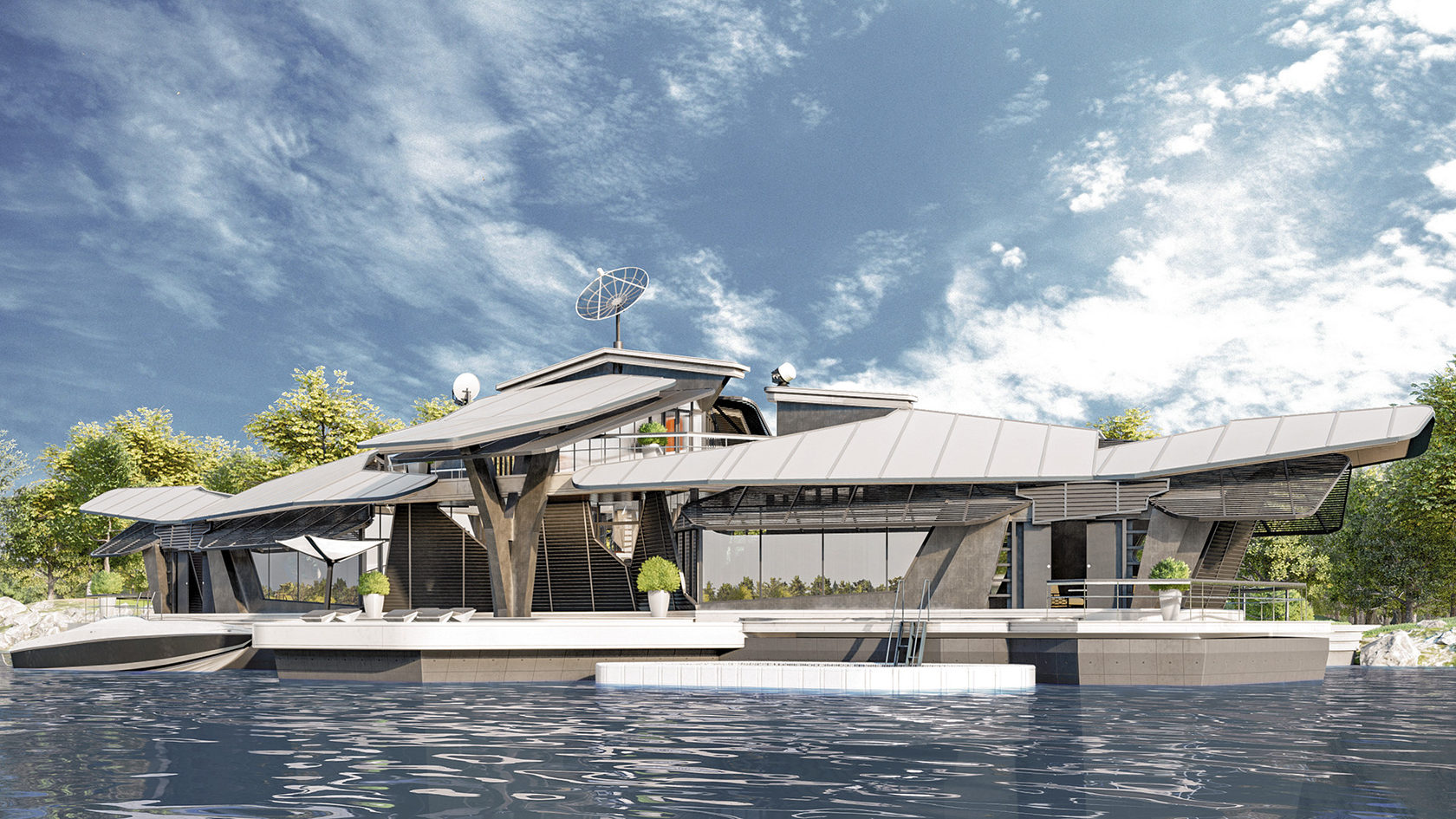
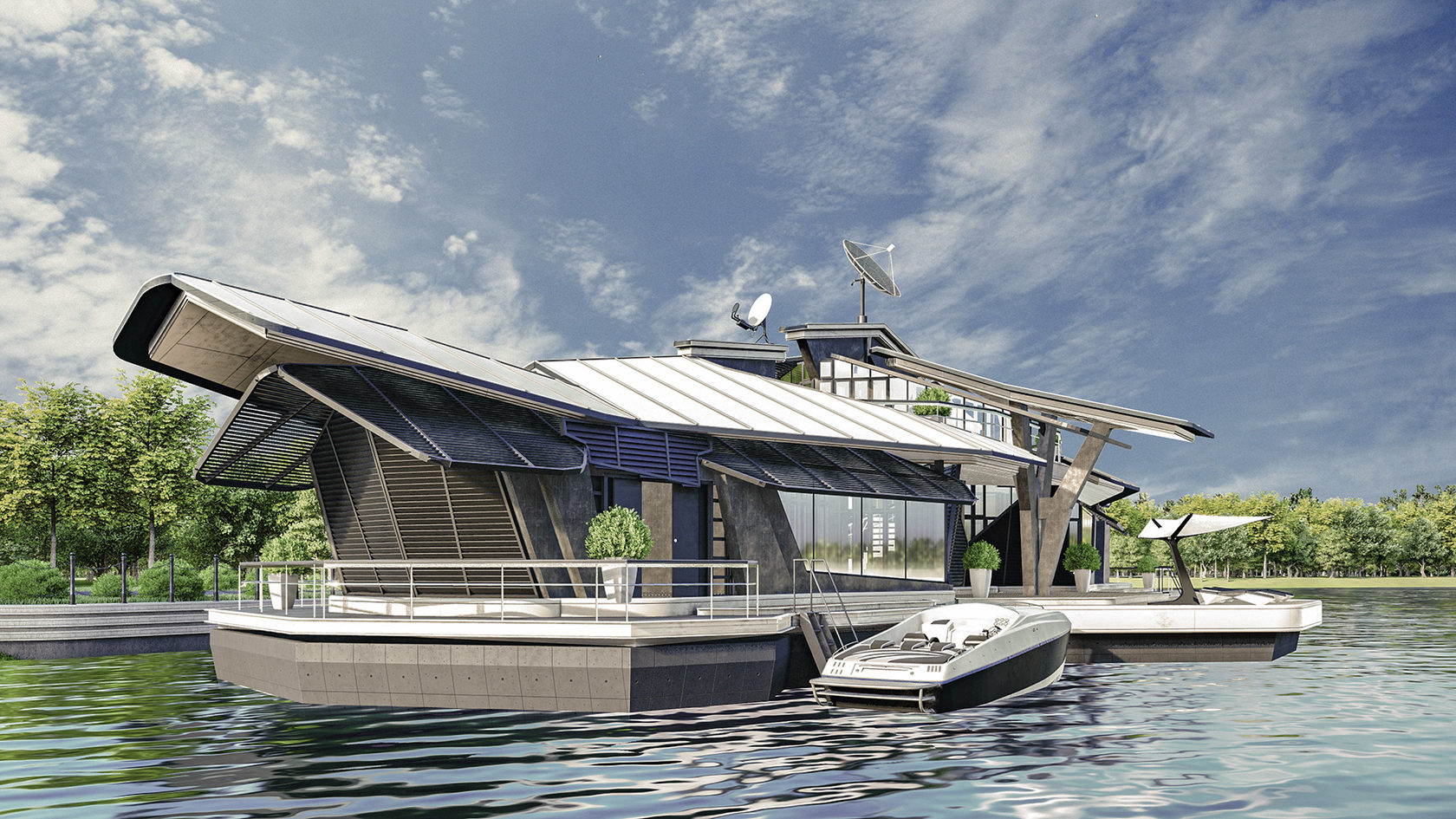
If you study the geometry of CyberHouse BOAT carefully, you realize there is not a single accidental line.
Every break in the hull, every cantilever, every angled surface functions simultaneously as:
structural protection,
a climate shield,
an aerodynamic element,
solar control,
and a visual language of the object itself.
The form is born entirely from function - much like aerospace engineering or stealth technology.
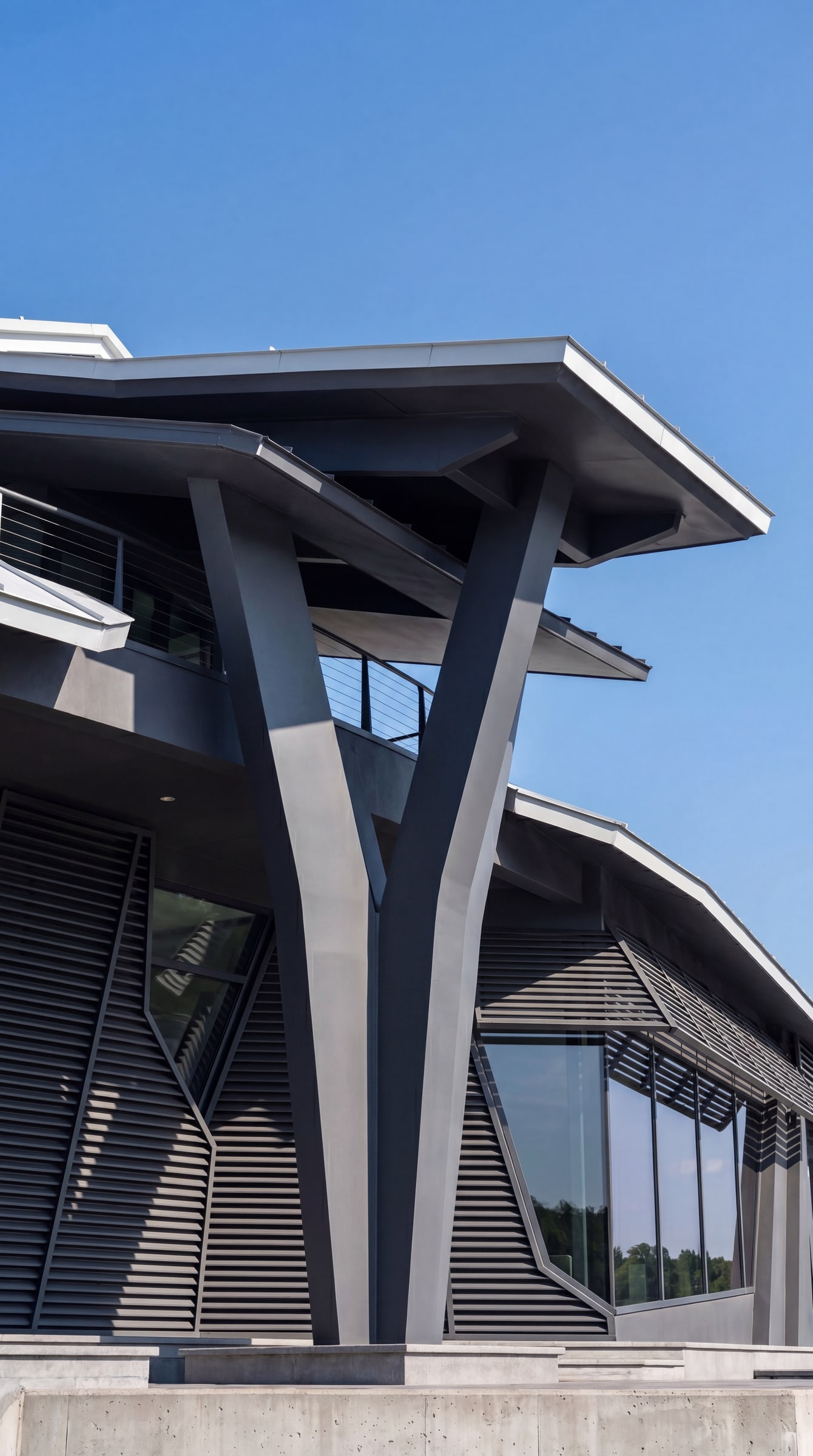
Even the central structural supports were designed not as traditional columns, but as elements of a futuristic terminal or orbital station. It was important to me that the project feel as if it had been created not by a shipyard, but by an aerospace corporation from the next century.
But real architecture, for me, never begins with form.
It begins with the human being.
For years I have said that a true architect must know how to decode the client's cultural DNA: their psychology, rhythm of life, ambitions, relationship with privacy, security, and the future itself.
CyberHouse BOAT was designed exactly this way.
For one person, water represents relaxation.
For another, freedom.
For a third - the ability to step outside the system and maintain control over their own life.
My goal was to understand who the future owner truly was - and translate that understanding into architecture.
That is why CyberHouse BOAT became simultaneously:
a sanctuary,
a mobile residence,
a biohacking environment,
and a symbol of independence.
A major focus of the project was the psychological feeling of security.
The modern world is becoming increasingly unstable - geopolitics, information overload, climate risks. I wanted to create a space that functions as an architectural anti-stress shield.
The project incorporates a multi-layered protection system:
a reinforced metal exoskeleton,
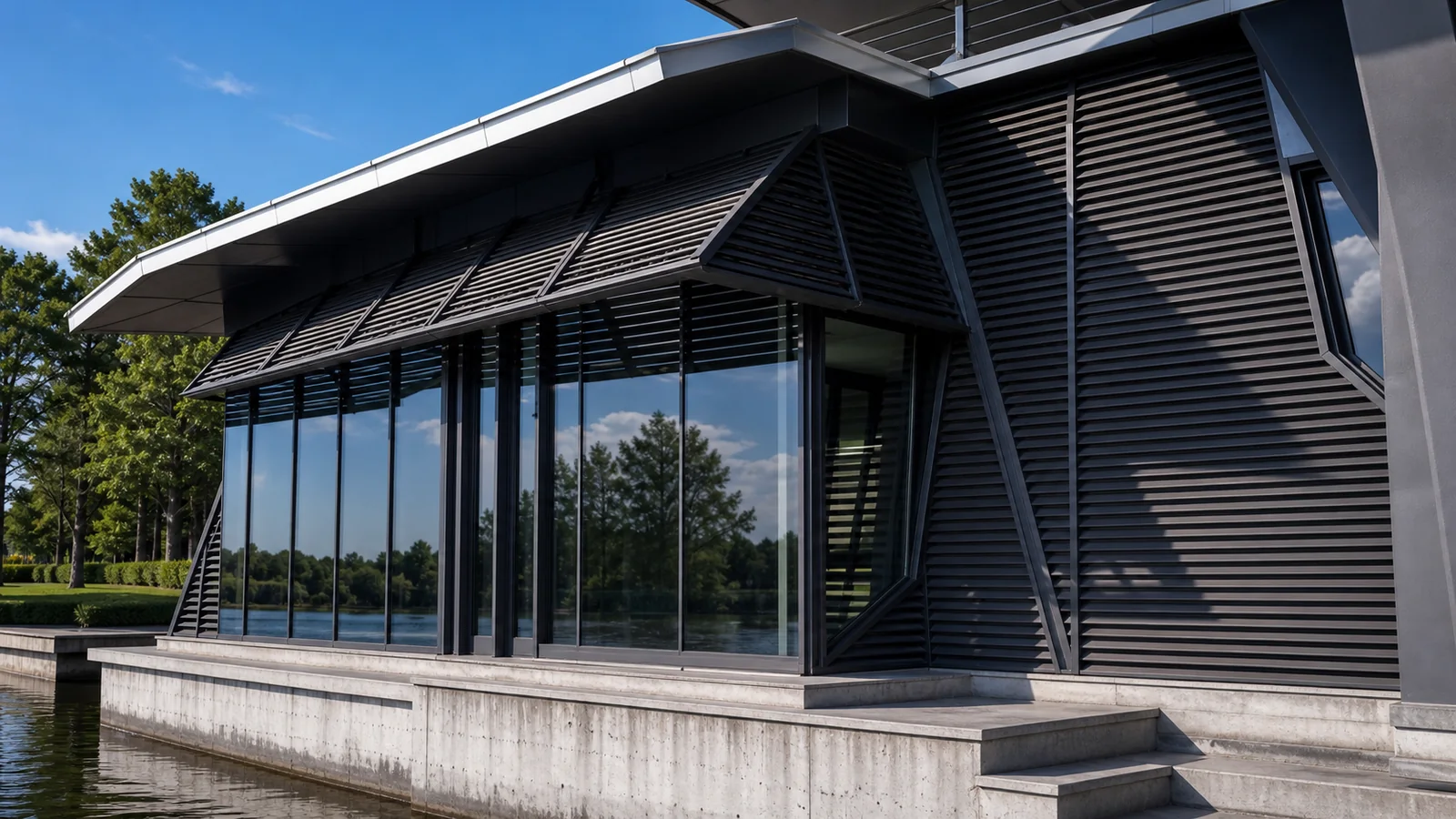
armored panoramic glazing,
high-speed protective shutters,
NBC air filtration,
and complete independence from coastal infrastructure.
Yet despite its defensive capabilities, the object does not feel aggressive.
On the contrary - it creates a sense of light, silence, and internal calm. The panoramic glass surfaces dissolve the boundary between interior space and the horizon itself.
I have always believed that the true luxury of the 21st century is control over your environment.
That is why CyberHouse BOAT was engineered as a fully autonomous ecosystem:
integrated solar energy,
water desalination systems,
intelligent climate control,
energy independence,
and a complete life-support infrastructure.
But the most important part of the project for me was biohacking.
Most people underestimate how deeply architecture affects human biology:
light regulates hormonal systems,
acoustics influence anxiety levels,
air quality impacts cognitive performance,
and micro-vibrations and humidity directly affect the nervous system.
On the water, these effects become even more powerful.
CyberHouse BOAT became an experiment in creating the ideal biological environment at sea:
circadian lighting scenarios;
neuro-acoustic vibration and noise suppression;
molecular-level air and water purification;
humidity and oxygen optimization;
deep recovery and stress-reduction systems.
In essence, this is a high-performance capsule for cognitive longevity.
From the beginning, the project was designed with a 50-100 year horizon in mind.
I am convinced that within the coming decades architecture will actively interact with AI systems, humanoid robots, and personal robotic assistants. That is why the spatial logistics, circulation routes, docking zones, and ergonomics of the residence were designed from day one for a robotic future.
CyberHouse BOAT is architecture prepared in advance for the next civilization.
A private island capable of movement.
A fortress that can disappear beyond the horizon.
A home independent from the instability of the world around it.
And perhaps that is exactly what true luxury will look like in the future.
The aquatic extension of the Cyber Line - a multi-level autonomous residence on water, merging architectural permanence with maritime freedom. CyberHouse Boat is conceived for those who define liberty as the ability to choose their horizon daily.
Architecture
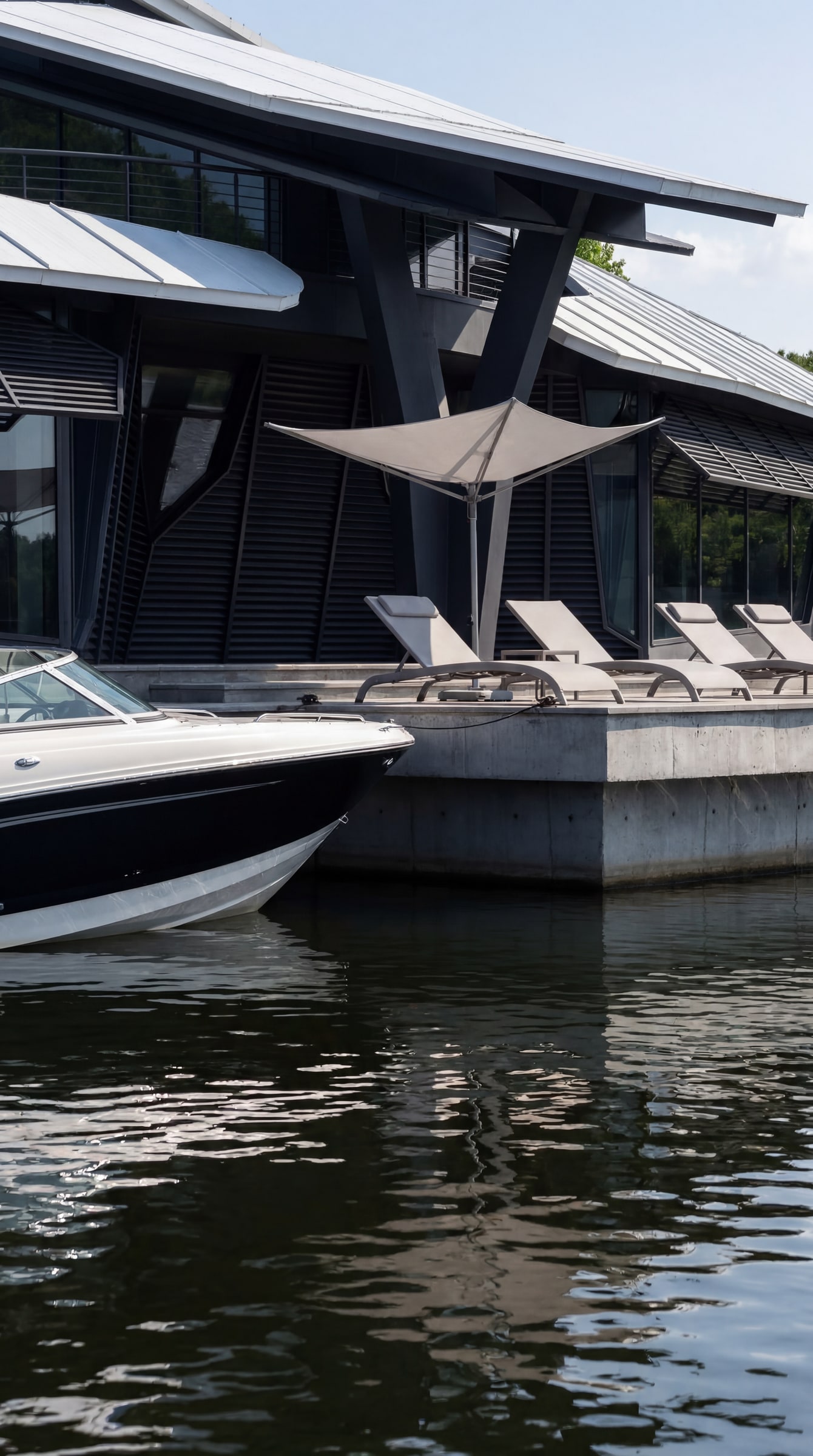
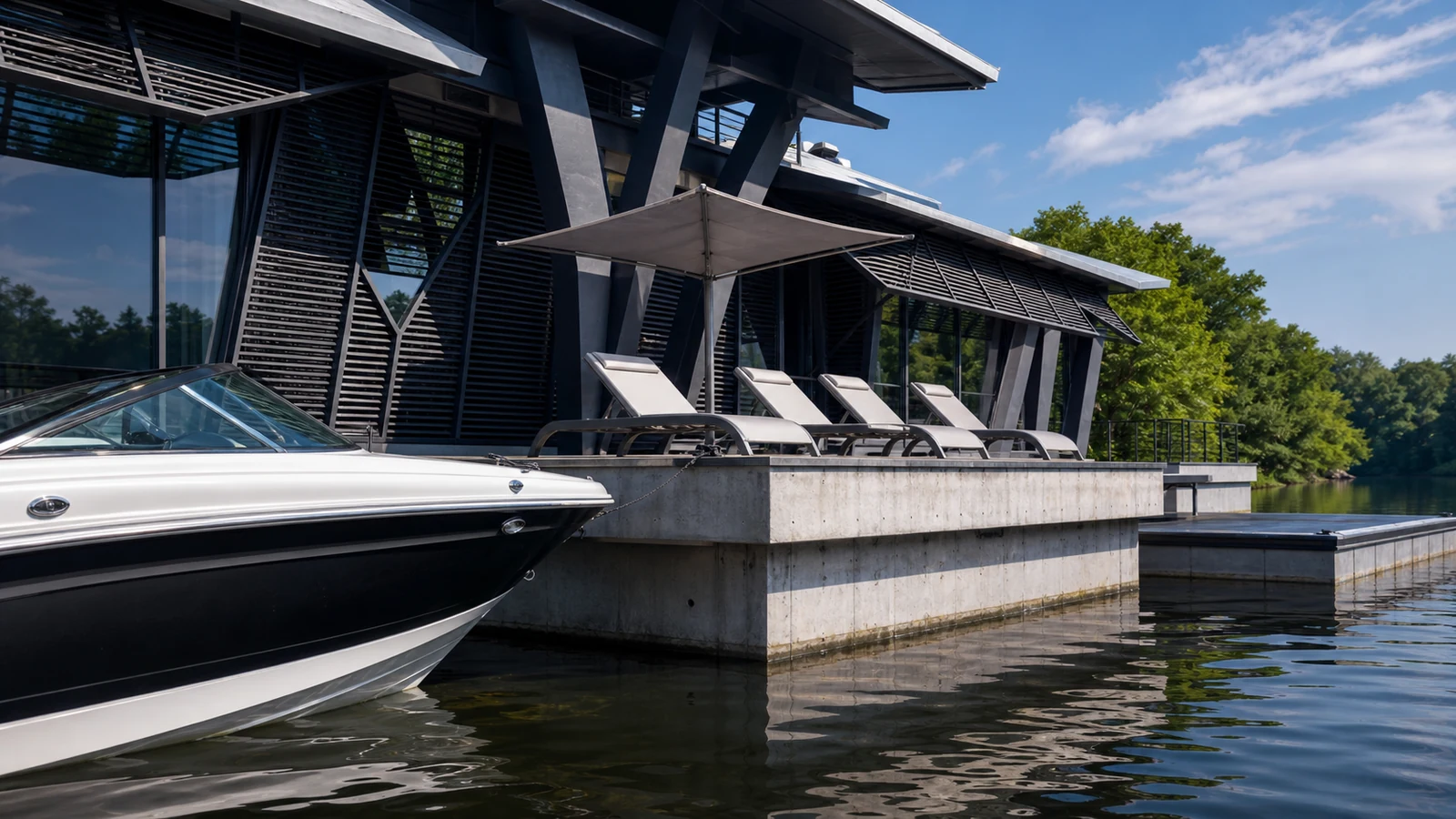
The vessel is composed as a low, angular mass riding close to the waterline, its faceted composite skin continuous from hull to superstructure. There is no visual break between boat and building - the entire object reads as architecture that happens to float. The proportional logic follows the original CyberHouse: layered privacy zones descending from the exterior shell to a secure core at the heart of the lower deck.
Materials are specified for maritime permanence:
Reinforced marine-grade hull. Engineered for blue-water conditions and multi-decade service life.
Composite facade panels. Weather-resistant, corrosion-proof cladding maintaining architectural clarity in salt environments.
High-security glazing. Impact-resistant floor-to-ceiling panels with 360-degree views, fitted with automated privacy shutters.
Interior secure core in reinforced concrete. Structural and acoustic sanctuary within the vessel.
BIO-CIRCUIT Systems - Maritime Performance
Hybrid energy independence: high-efficiency solar arrays, wind turbines, and high-capacity battery storage for continuous off-grid operation.
Medical-grade air and water filtration adapted for maritime environment, maintaining interior air quality regardless of external conditions.
Closed-loop waste management: zero-discharge operation maintaining environmental responsibility.
Full climate control and circadian lighting, supporting biometric optimization regardless of latitude or weather.
Communication sovereignty: triple-layer satellite and encrypted systems maintaining connectivity in any maritime zone.
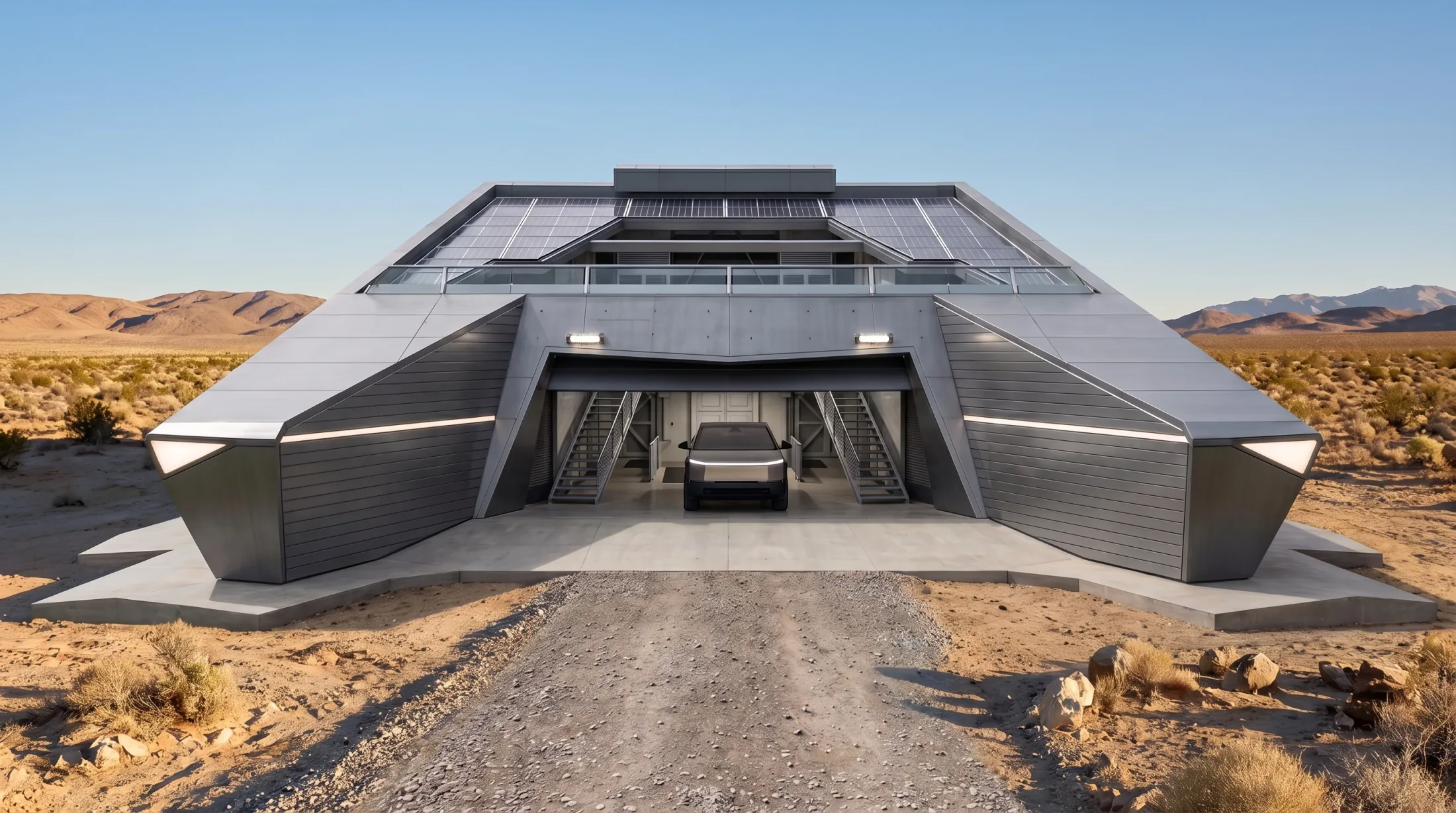 CyberHouseAn ultra-protected private residence with autonomous systems and a reinforced bunker core.
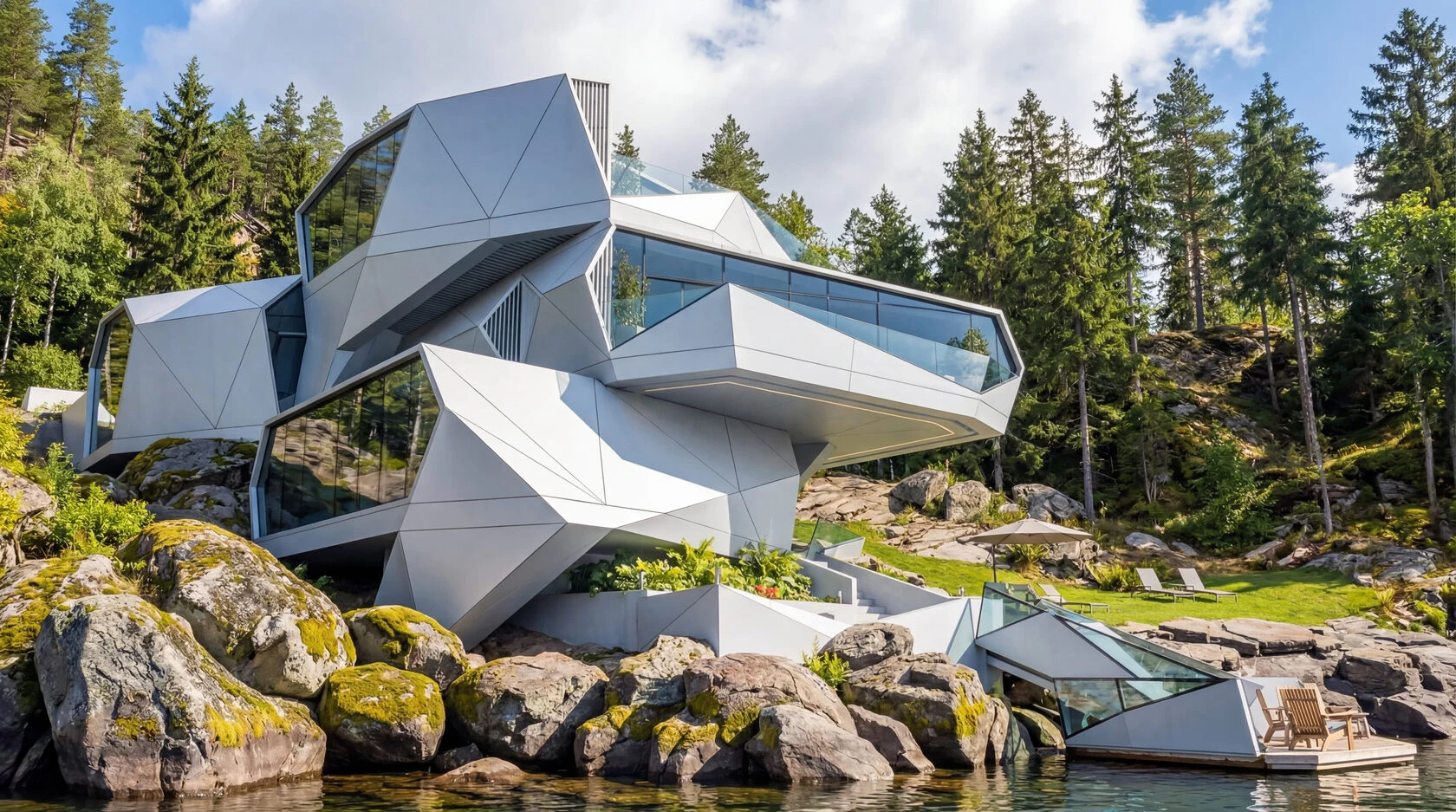 CyberHouse LifeA protected mountain residence where security, terrain, and private life operate as one system.
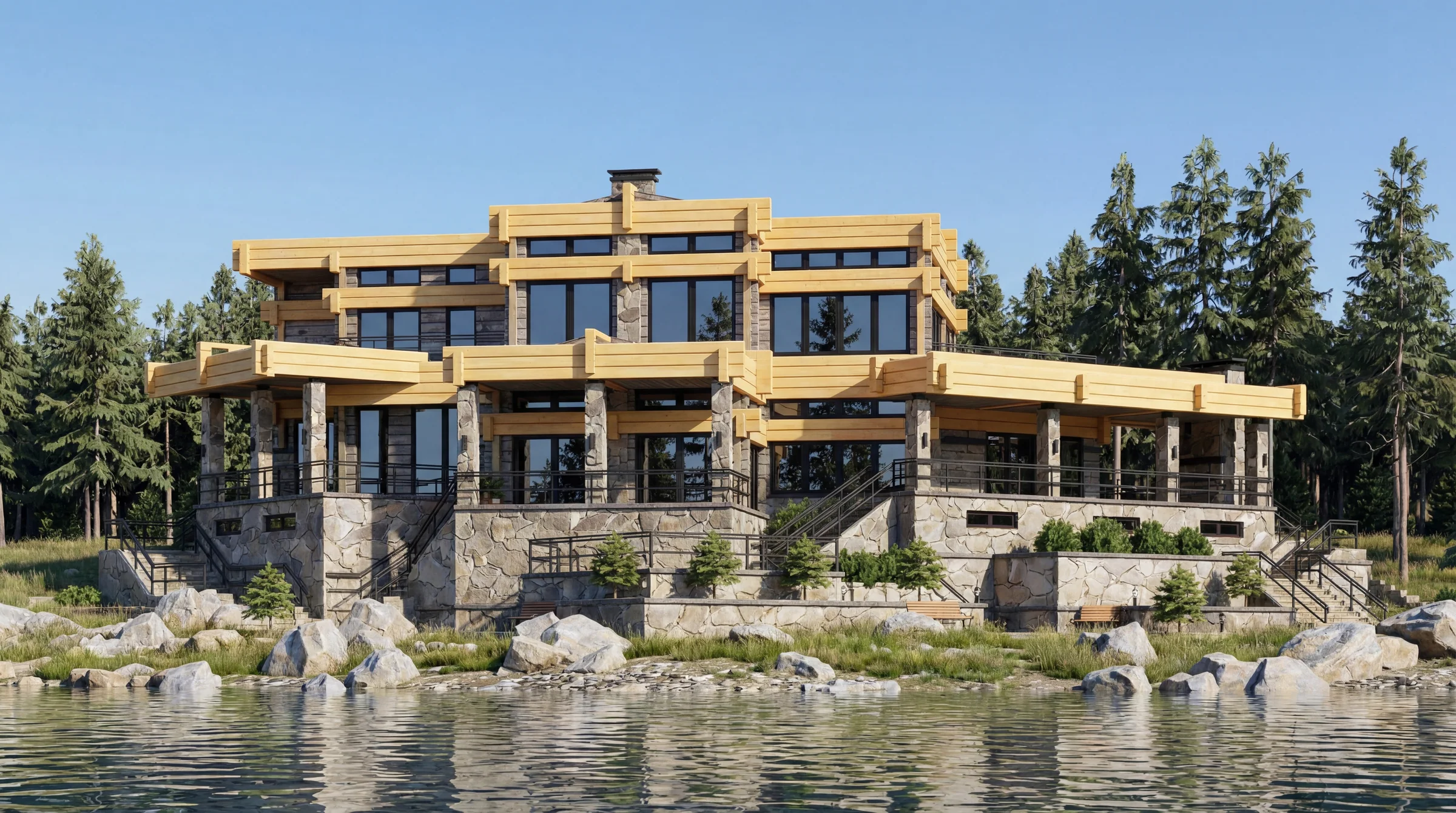 Eco Hi-TechA complex timber-led residence shaped around ecology, comfort, and high-tech structure.
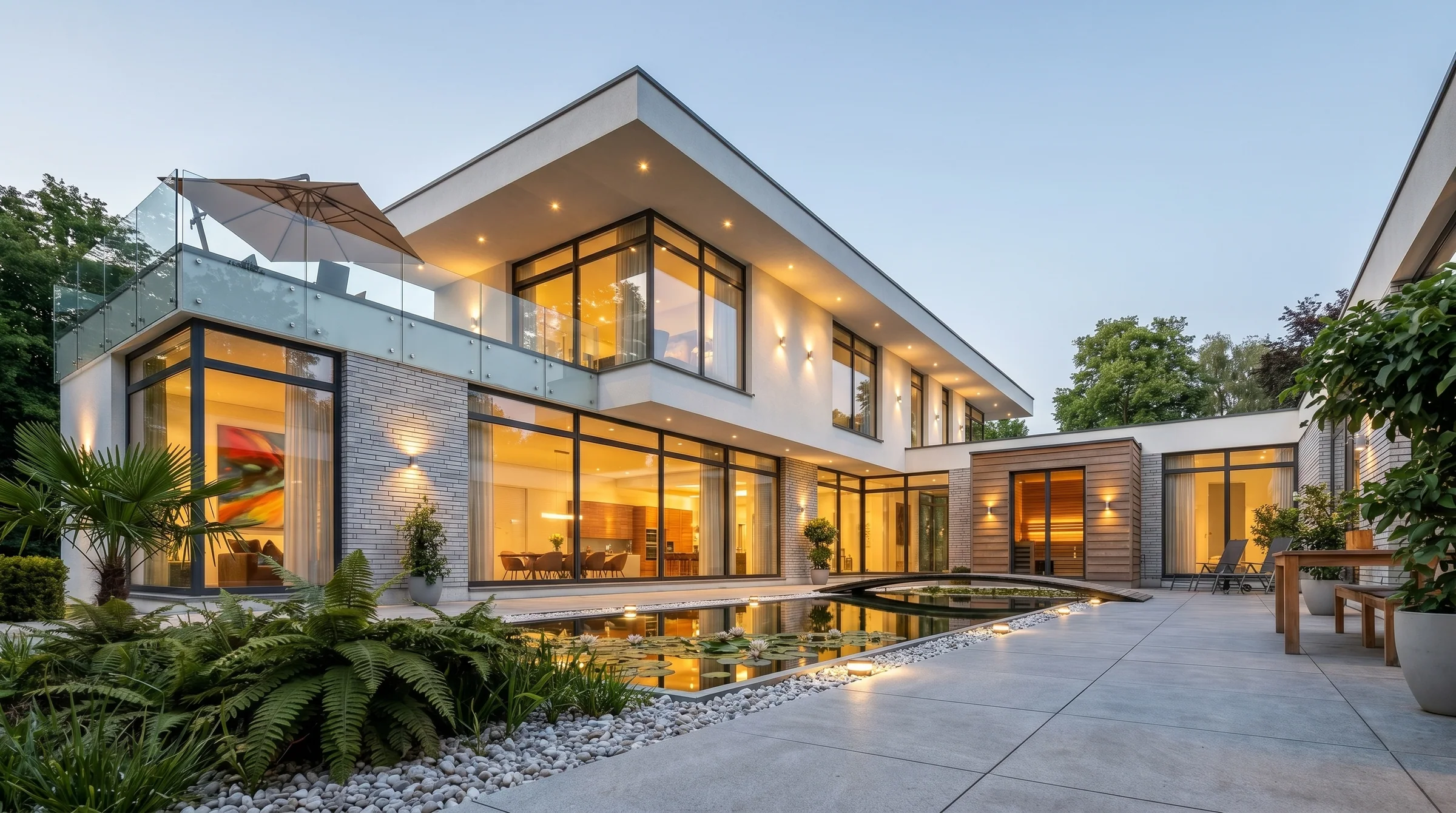 Hi-Tech VillaA private high-tech villa designed around control, privacy, and landscape-facing living.